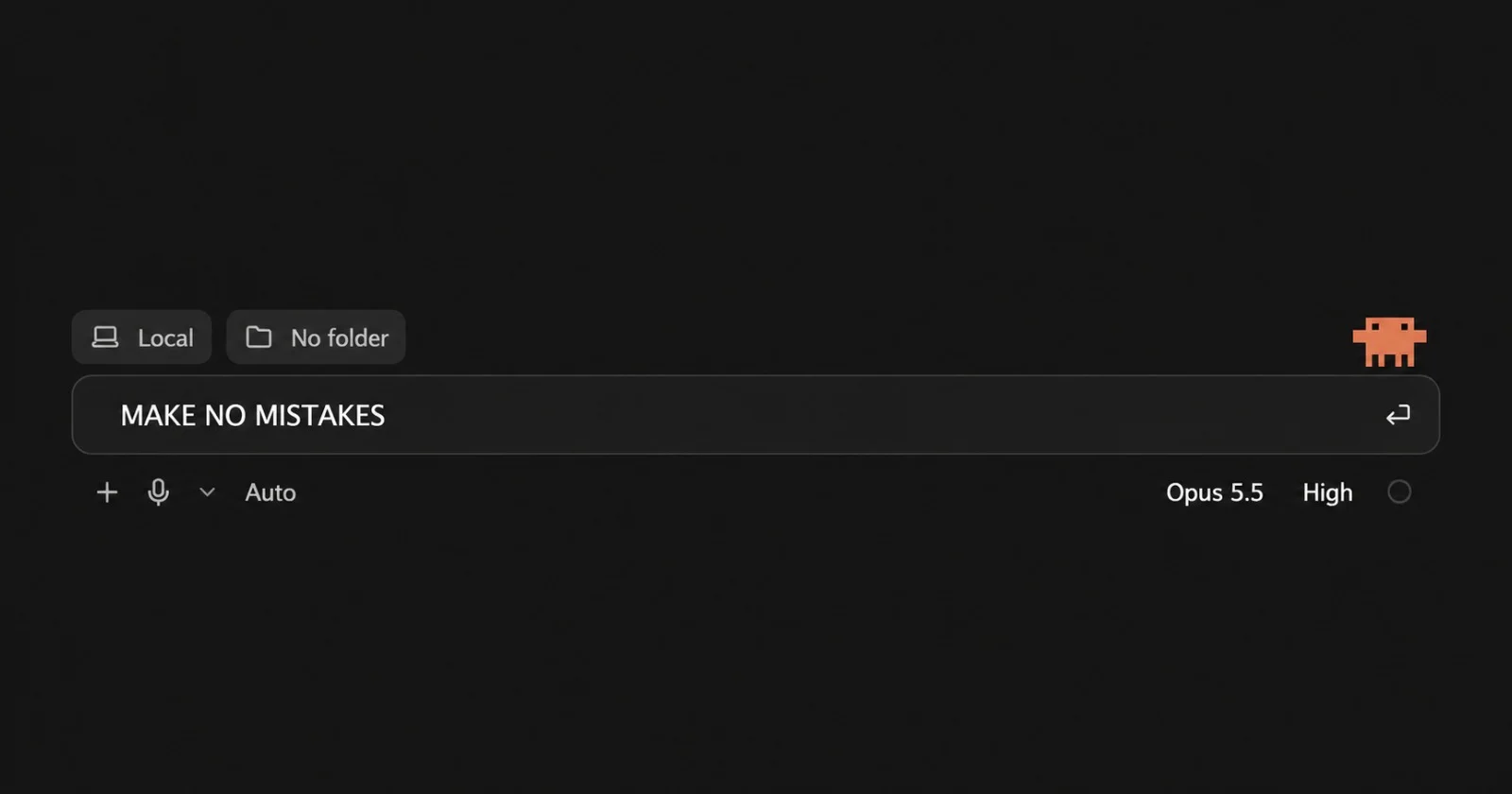
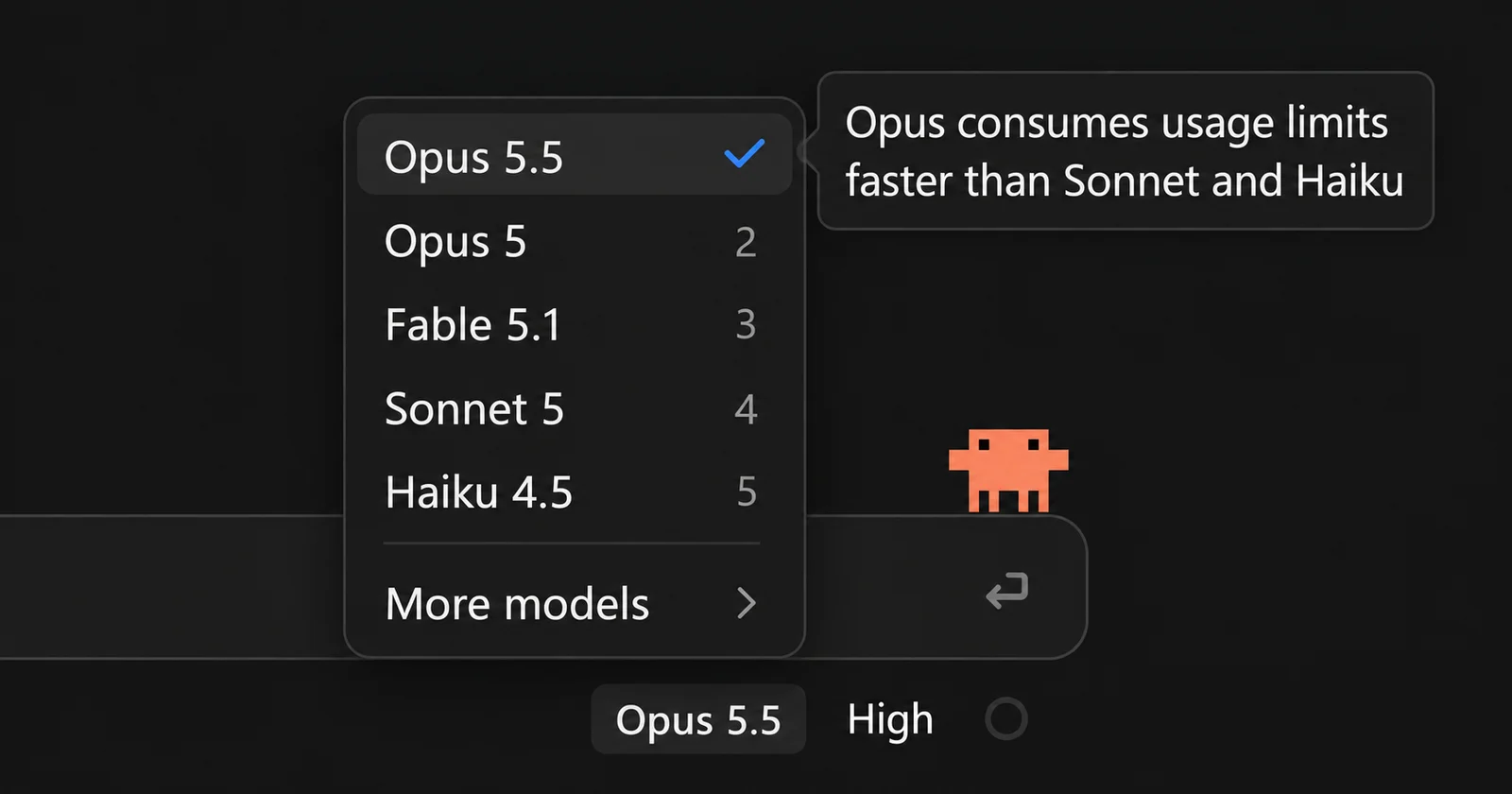
Anthropic released Claude Opus 5.5 on September 22, about two months after Opus 5 came out. It's in the Claude apps on Pro, Max, Team, and seat-based Enterprise plans, and on AWS, Google Cloud, and Microsoft Azure under the model ID claude-opus-5-5.
Input now costs $4 per million tokens, down from $5, and output is $20, down from $25. Cache reads went from $0.50 to $0.20 per million and cache writes from $6.25 to $5, and fast mode runs $8 and $40. Because the model also gets through the same work on fewer tokens, Anthropic said that "at default settings it will cost 40% less than Opus 5 on typical workloads."
It writes less, too, which is what a lot of longtime users have wanted since Opus 5 shipped. In Anthropic's evaluations Opus 5.5 "used a third of the tokens Opus 5 did, and its answers were 40% less verbose without losing accuracy." Length was the main complaint in our August piece on why a smarter model felt worse to use, and Anthropic says output now comes out more than 30 percent faster as well.
Medium is the new default effort level. Anthropic's pitch for it is that "at default effort (medium), Opus 5.5 beats GPT-6 Astra at max effort for about a fifth of the cost per task." I wrote a post in July telling people to run Opus 5 at medium, so that doesn't change for Opus 5.5.
On Terminal-Bench 4.0, the agentic coding test at the top of Anthropic's table, Opus 5.5 scored 66.4 percent. Opus 5 scored 52.3, Fable 5.1 55.8, and OpenAI's GPT-6 Astra 57.9, so Anthropic's mid-tier model now beats its own top model on that test by more than 10 points.
CursorBench 4.0 went the same way, 57.8 percent against Fable 5.1's 51.8 and Opus 5's 46.6, and on Humanity's Last Exam with tools it scored 67.7 to Fable 5.1's 65.6. Astra did win one of the comparisons Anthropic published, AutomationBench, 41.4 percent to 40.0.
Anthropic also said Opus 5.5 caught 72 percent of known bugs "even at its lowest effort setting," while Opus 5 caught 56 percent at high effort. One tester finished a 680,000-line code migration in less than a day.
Five-hour usage limits are going up on Pro, Max, Team, and seat-based Enterprise plans, though Anthropic didn't say by how much. Subscribers also get a rate limit reset "which you can now save and use whenever you choose." The announcement doesn't mention the weekly limit, which was cut 17 percent on September 14 when the 50 percent promotion ended, and it doesn't say whether the saved reset covers the weekly cap or only the five-hour window.
It's also the first model since the pacing essay. "Claude Opus 5.5 is our first release since we called for pacing the frontier," the announcement says, referring to Dario Amodei's September essay arguing the industry should slow down capability gains, which we wrote about here.
Outside evaluators including METR and Frontier Design tested the model before release. On Anthropic's automated behavioral audit, "Opus 5.5 is the strongest-performing model we've tested to date," and it tried to get around its boundaries about 85 percent less often than Opus 5. Anthropic calls it "a major step up from Opus 5" and doesn't take up whether a model that tops its own flagship on Terminal-Bench, a few weeks after that essay, counts as moving the frontier.
Most cybersecurity work still goes to an older model. Users "will be able to identify and fix bugs in their code as part of the routine software development lifecycle, but most cybersecurity tasks will be re-routed to Opus 4.8," Anthropic said. Opus 5.5 also launches with preserved thinking, the anti-distillation safeguard that came with Fable 5.1, which "stops API users from editing Claude's prior context in an attempt to extract Claude's reasoning."
Claude Sonnet 5.5 and Claude Haiku 5.5 are due in the coming weeks, Anthropic said.
Sources
Anthropic: Introducing Claude Opus 5.5 - The September 22, 2026 release, model ID, platform and plan availability, $4 and $20 pricing with cache and fast-mode rates against Opus 5, the 40 percent typical-workload cost claim, the token and verbosity reduction, output speed, medium default effort and the GPT-6 Astra cost comparison, benchmark tables for Terminal-Bench 4.0, CursorBench 4.0, Humanity's Last Exam, and AutomationBench, the bug-detection and code-migration results, the five-hour limit increase and savable rate limit reset, the pacing-the-frontier statement, alignment and boundary-circumvention results, cybersecurity re-routing to Opus 4.8, preserved thinking, and the coming Sonnet 5.5 and Haiku 5.5 releases.
9to5Mac: Anthropic upgrades Claude with new Opus 5.5 model - Zac Hall's September 22, 2026 report on the release, including external testing by METR and Frontier Design, the 40 percent cost claim, and the rate limit reset.