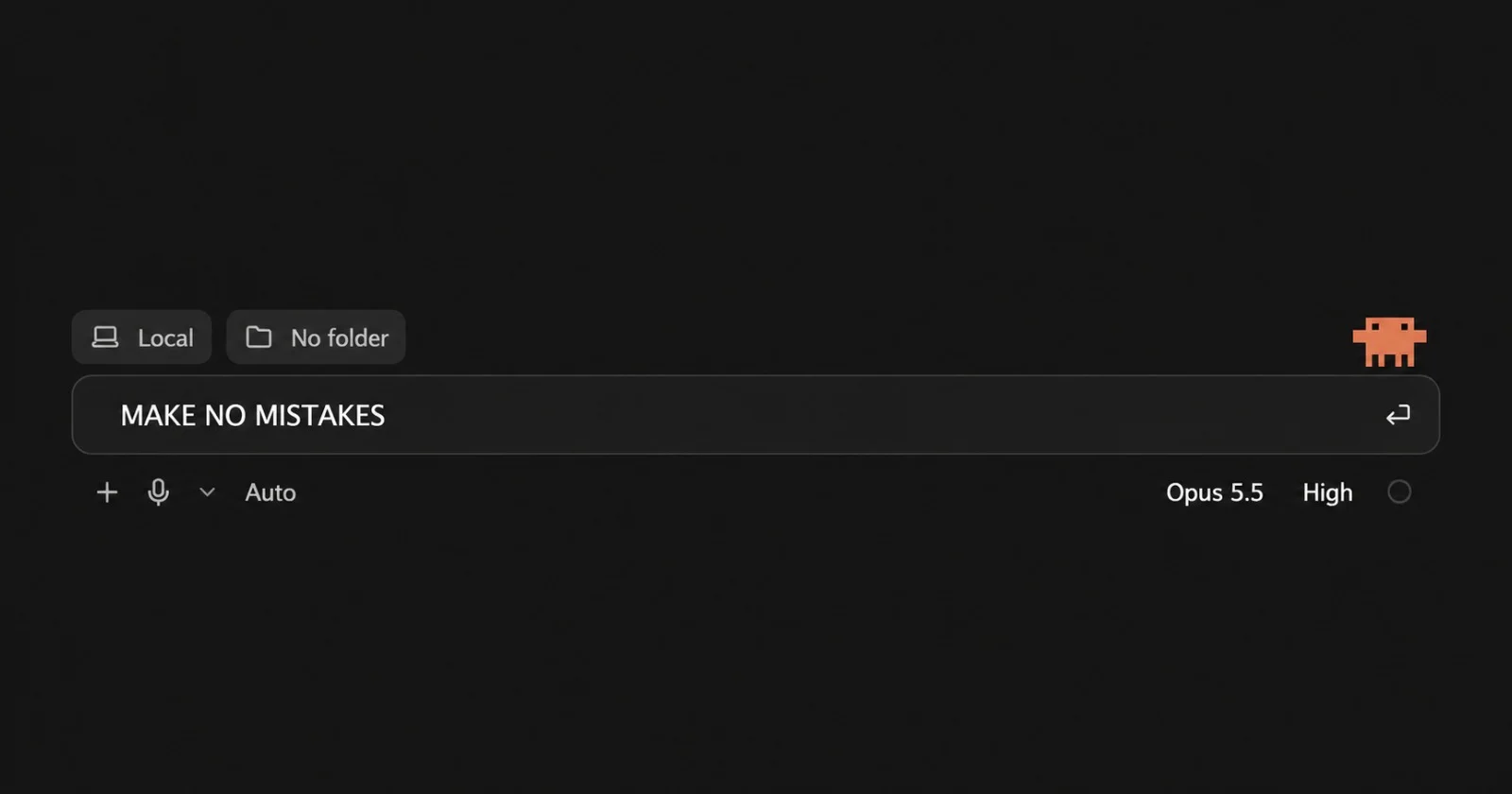

Claude Opus 5 and the other Anthropic models have a setting called effort with five positions: low, medium, high, xhigh and max. What's the best effort to use?
What the effort setting does
When you ask Claude something hard it thinks before it answers, and the effort setting controls how much thinking it does before getting back to you. Low gives you a fast answer without much deliberation and max lets it think as long as it wants.
The part that matters for your usage is that more thinking costs more tokens to be used.
What the FrontierCode numbers show
A benchmark called FrontierCode ran Opus 5 at each effort level on realistic coding tasks. At medium effort Opus 5 scored 53.4 percent and 63.6 percent on the two test sets, its best scores of the whole run. At high effort the scores flattened out or dipped slightly while the compute cost roughly doubled, from about 1.5x baseline to about 3x. High effort cost twice as much and did not score better than medium effort.
Think about a student taking an exam. The one who skims does badly and the one who works carefully through each question does well. The one who agonizes over every answer, erases, rewrites and talks himself out of a correct first instinct doesn't beat the careful student, and he's still sitting there after everyone else has gone home. Models do a version of this past a certain point.
FrontierCode hasn't published its full methodology and the publication reporting the results says the figures should be treated as provisional. But the results generally line up with what Anthropic says in its own documentation.
How medium compares to Fable 5
Opus 5 at medium landed within one to two percentage points of the highest score recorded in that run, which came from Fable 5 at high effort using roughly two and a half times the compute.
Anthropic's own guidance
Anthropic's docs say Opus 5 defaults to high effort and tell you to use low and medium "liberally as your primary control for token cost and response time" wherever quality holds up on your own evals. Max is described as being for tasks that justify unconstrained token spending.
The guidance written for an earlier Opus model put it more directly. Reserve max for genuinely frontier problems, because on most workloads it adds significant cost for relatively small quality gains, and on some structured-output tasks it can lead to overthinking.
Which setting to use
- Medium for most general real work. Writing features, refactoring, everyday coding.
- High when the problem is genuinely hard or you're running complex multi-step agent work. This is also what you get by never touching the setting, since it's the default.
- Low for simple high-volume work where speed matters more than depth.
- Xhigh and max for the rare brutal problem you'd happily pay triple to solve.
Effort behavior varies by task, so test it on your own work rather than taking what's written as faith. Anthropic specifically warns that settings carried over from an older model should be re-checked instead of assumed. Run the same real task at medium and at high a few times and compare the results yourself.
Why it adds up
These tools will keep growing knobs like this one and the instinct to max everything out will keep being expensive, especially as the industry's economics push costs toward users. Changing one dropdown takes seconds. We broke down what you're actually spending across the plans and the API in the Claude Code cost guide, and Opus 5's wider value story is in our launch writeup.
On the API the field is output_config.effort, and it stays on high until you set it to something else.
Sources
SitePoint: Claude Opus 5 Is Most Efficient at Medium Effort - The FrontierCode v1.1 results showing Opus 5 peaking at medium effort with 53.4 percent and 63.6 percent on the main and extended sets at roughly 1.5x baseline compute, high effort flattening or dipping at roughly 3x, and medium landing within one to two points of Fable 5's top high-effort score, along with the publication's own disclosure that the benchmark methodology is unverified and the figures provisional.
Anthropic: the effort parameter documentation - The five effort levels, the high default on Opus 5, the guidance to use low and medium liberally as the primary cost and latency control, the note that effort affects all tokens including tool calls and thinking, the warning that max adds significant cost for small gains and can cause overthinking, and the advice to re-run an effort sweep rather than reuse settings from an older model.