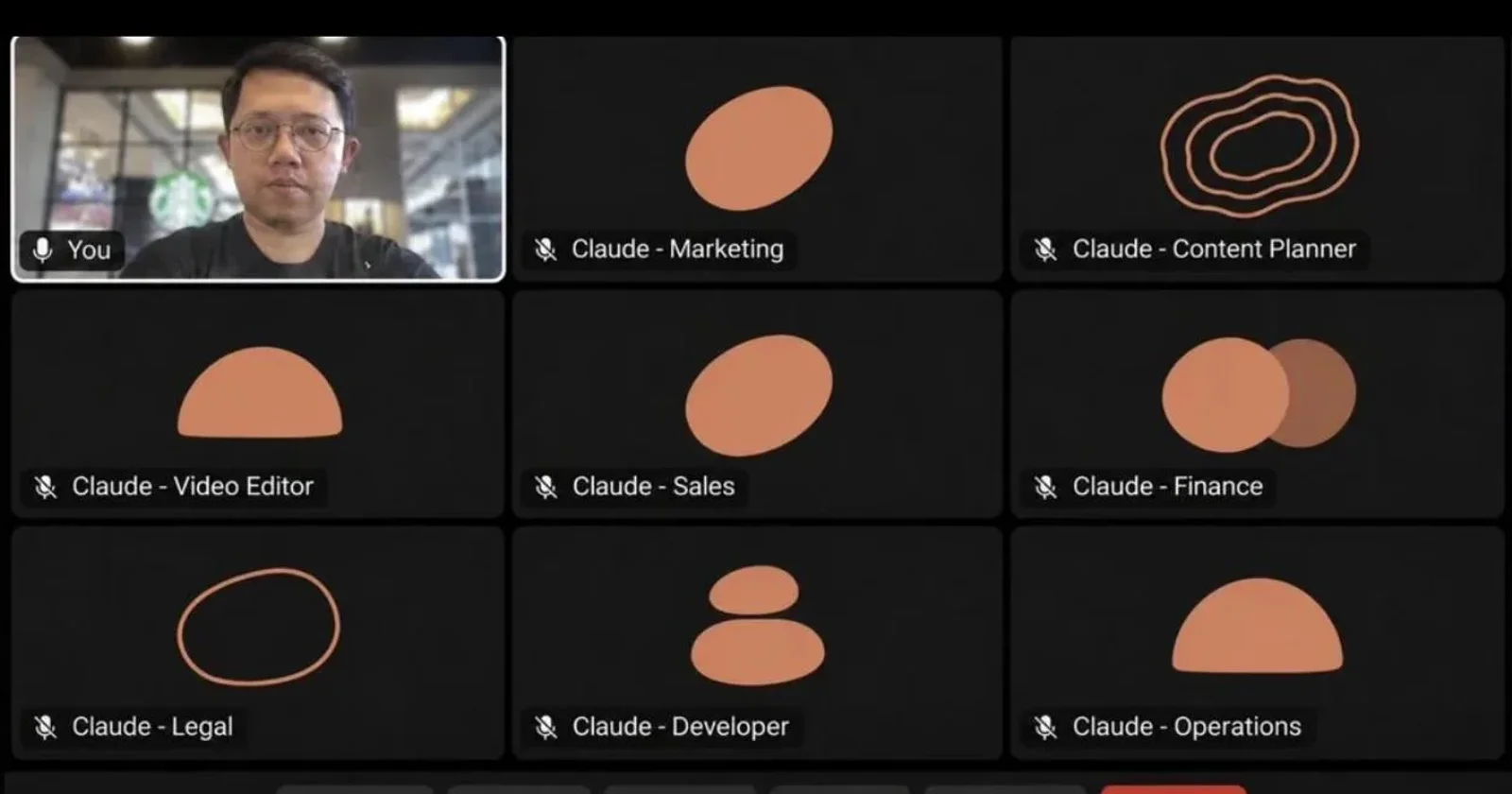
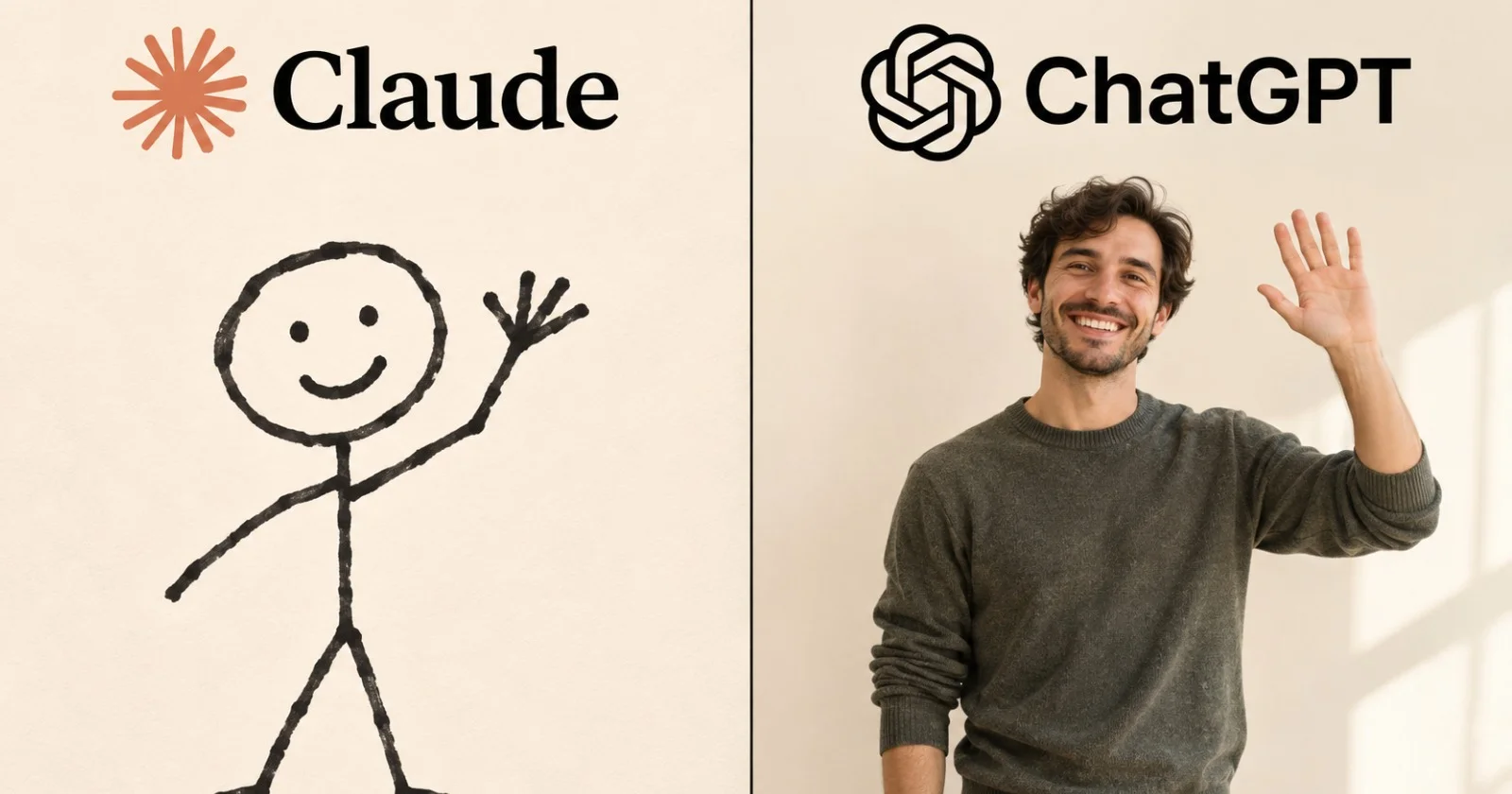
At the moment, Claude can't generate images at all, and that's the whole reason its characters look the way they do. Anthropic's help center says it plainly: "Claude doesn't generate photos or illustrations the way image-generation tools do." The developer docs go further and call Claude an image understanding model only. It can read and analyze a picture you give it, but it can't create or edit one.
When Claude hands you a picture anyway, what you're looking at is code. Claude can build custom visuals right in the chat, such as flowcharts, interactive charts, and side-by-side comparisons, and Anthropic says they're made with HTML and SVG. An SVG file is text that describes shapes by position: a circle centered here, a curve from this point to that one, filled with this color. Claude writes the text, and your browser draws it.
That works great for a bar chart, a diagram, or an icon, which are made of clean geometric shapes. A person or a cartoon character is a different job. Every curve of a face, the bend of an arm, and the way light falls on a cheek all have to be written out as numbers, one shape at a time. Claude places those numbers without seeing the result. In Claude Code it can render the file and look at a screenshot, which helps it catch a lopsided eye, but it's still nudging coordinates by hand. That's why you get clip art built from ovals.
What ChatGPT and Codex do differently
OpenAI's GPT Image models generate the picture itself. The line started on March 25, 2025, with image generation built on GPT-4o, and unlike the older DALL-E models, the GPT Image models build images step by step the way a language model builds text, according to Wikipedia's summary. They learn what faces, fur, and fabric look like from images, so a request for a character gets you pixels shaped like one, with shading and texture no SVG file would ever hold.
Codex got the same ability on April 21, 2026, when OpenAI released gpt-image-2 in its API and in Codex. OpenAI said the model reached the top spot on every Image Arena leaderboard within hours of launch. So a coding agent working in your project can make its own hero image or app icon while it builds the page.
Characters got another boost on November 4, 2026, with ChatGPT Images 2.6. It added animated GIFs and saved reference images of yourself, your pets, and your characters, so you can reuse the same character in new pictures without uploading it again. That consistency across images is exactly what a code-drawn character can't do well, since each new pose means writing new coordinates from scratch.
Anthropic hasn't said publicly why Claude doesn't make images. Its help pages describe what Claude does instead and leave it there.
Drawing with code has real upsides. SVG graphics scale to any size without going blurry, you can edit them later, and they're tiny. We used that ourselves: thirteen of our fourteen Claude Code themes are animated SVG scenes Claude wrote as code, built mostly from repeated simple shapes like rain streaks, stars, and embers. The cat in our Fireside theme is a dark silhouette, which plays to that strength.
If you need people or detailed characters, though, use the right tool for that step:
- Ask Claude for the prompt, not the picture. Claude is good at describing a scene in detail. Paste its description into ChatGPT or another image tool.
- Let Claude Code call an image API. If you have a key for an image service, Claude Code can write the script that calls it and saves the files into your project. Keep the key in an environment variable, not in your code.
- Hand the image job to Codex. If you pay for ChatGPT, Codex already includes OpenAI's image model, and some developers split the work, with images in Codex and the rest in Claude Code.
- Keep SVG for what it's good at. Icons, logos, diagrams, charts, and simple illustrations come out clean, and Claude can revise them in seconds.
- Use Claude as the reviewer. Since Claude reads images well, upload what the image tool made and ask what's off, from a wrong number of fingers to text that doesn't match.
Claude's knack for layout and code is also why it's strong at interface design, which we saw when we tried Claude Design. For a character with a face, ask something that paints.
Sources
Claude Help Center: Can Claude produce images? - March 16, 2026. Claude doesn't generate photos or illustrations, builds visuals with HTML and SVG, and can view images you upload.
Claude Help Center: Custom visuals in chat and Cowork - April 22, 2026. Diagrams, charts, and interactive visuals in beta on web and desktop.
Claude Platform docs: Vision - Claude is an image understanding model only and can't generate or edit images.
OpenAI Developer Community: Introducing gpt-image-2 - April 21, 2026. gpt-image-2 in the API and Codex, and its Image Arena results.
OpenAI Developer Community: Introducing ChatGPT Images 2.6 - November 4, 2026. GIFs, saved reference images for characters and pets, and two new API models.
Wikipedia: GPT Image - The March 25, 2025 launch with GPT-4o and how GPT Image models differ from DALL-E.