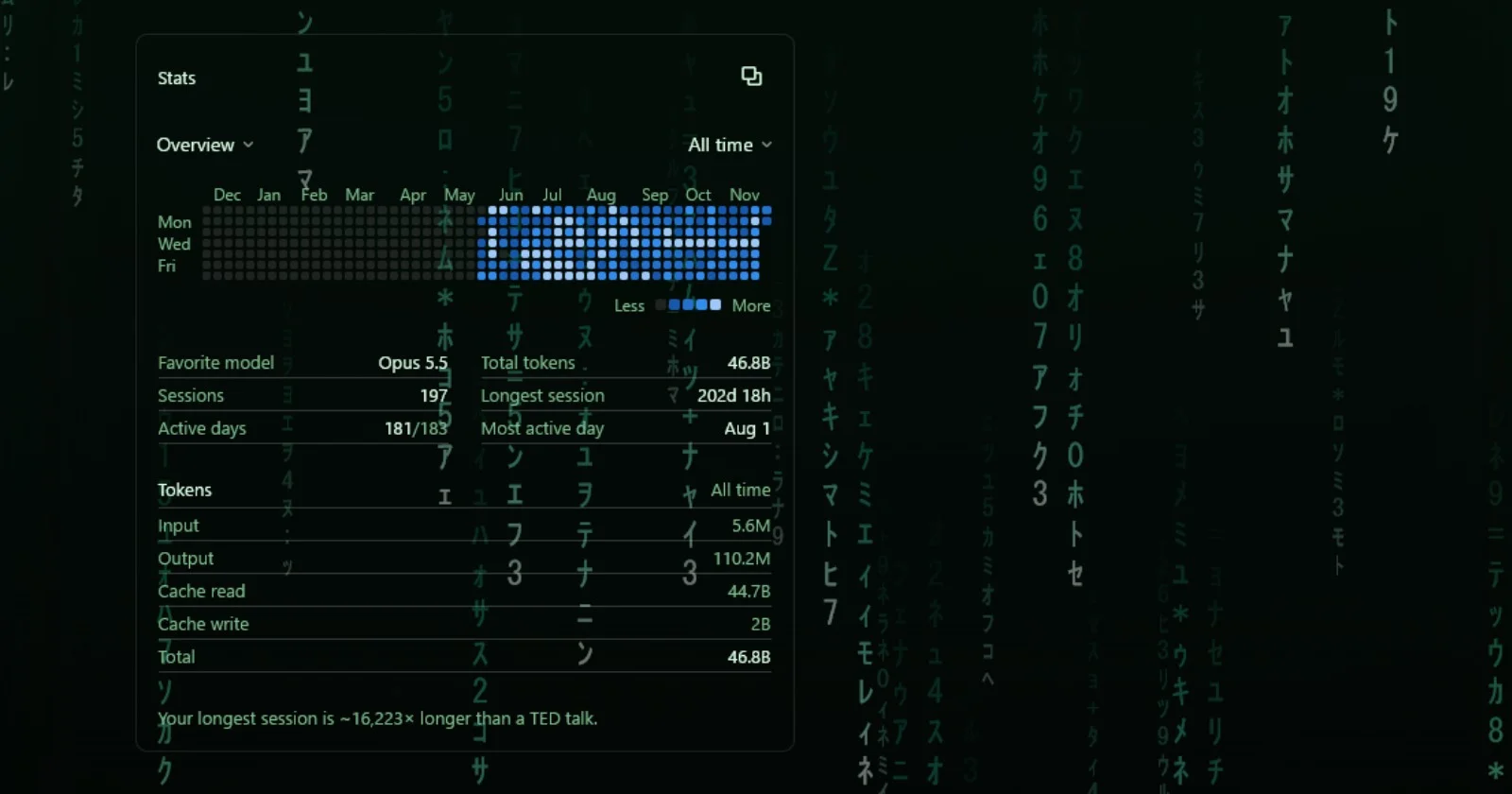

A post in r/ClaudeCode this week asked something some of you may have been wondering quietly: "Do you also find Claude addictive?" The poster called Claude “a dopamine release agent as much as a coding agent.” Claude finds a bug that sat unnoticed for years, fixes it in ten minutes, adds two features you didn't know you needed, and then it's 2 a.m., you're not tired, and another agent just finished a task.
Several commenters with ADHD said the hyperfocus helps but leaves them drained by the end of the day, and one said they need rest days from it. Another keeps Claude on an iPad for a quick check in bed and said that cost them even more sleep. A senior developer with more than 30 years in the job wrote that they've worked past quitting time more often in 2026 than in any year they can remember, because they were enjoying it. Others weren't buying it. One answered "Lol no," and another said they work to live, full stop.
Another commenter said they used to burn days deep in some topic without ever building anything, and now they make a small tool, learn along the way, and get on with their day sooner. For them, Claude ends the rabbit hole faster.
Why it feels like a slot machine
The comparison people keep reaching for is gambling. A LeadDev piece from June laid it out: most prompts are routine, some fail, and every so often one produces something unexpectedly great, the same kind of unpredictable reward that keeps people pulling a lever. Steve Yegge, who calls AI coding a big productivity boost, told LeadDev "The AIs can be like sirens" that keep you at your computer longer than you should be. Agents add their own hook, since a finished task pings you whenever it lands, at any hour.
LeadDev's Engineering Leadership Report 2026 found that 45% of respondents work more hours per week than a year earlier, up from 38% in 2025. Among staff, principal, and distinguished engineers, it jumped from 28% to 53%. And 49% of software engineers said they feel emotionally drained at work at least once a week, up from 39%. Feeling productive and being productive can also come apart. In a 2025 METR study, experienced open-source developers took 19% longer on tasks when they were allowed AI tools, yet afterward they believed the tools had sped them up by 20%. That study used early-2025 tools, and Claude has improved a lot since, so the number itself is dated. The gap between how fast people felt and how fast they were is the part worth remembering. Speed can cost learning too. In Anthropic's own study from January, 52 developers learned an unfamiliar Python library with or without AI help. The AI group averaged 50% on a quiz afterward, against 67% for the people who coded by hand, and the biggest gap was on debugging. People who asked the AI conceptual questions held on to more than people who handed it the whole job.
Claude, oddly, sometimes tries to send people to bed. Fortune reported in May that users were getting unprompted "get some rest" messages, sometimes at 8:30 in the morning. Anthropic's Sam McAllister called it "Bit of a character tic" and said the company hopes to fix it in future models. So Anthropic treats it as a bug. Plenty of people in that Reddit thread could have used the reminder anyway.
Keeping it a tool you put down
The habits that work look a lot like the ones people use for phones and games:
- Pick a stop time before you start. When it comes, write the next task down for tomorrow instead of starting it.
- Keep it out of bed. The iPad check-in is how a quick look turns into an hour. Leave the phone app for daytime.
- Don't let the weekly reset set your hours. Squeezing in every last bit of usage before it resets has become a ritual of its own, and it's a deadline nobody gave you.
- Slow down before you ship. Read what changed before you approve it. That's where the learning happens, and where the 2 a.m. mistakes get caught.
- Ask Claude to explain. Anthropic's study suggests that asking for the reasoning keeps your own skills growing, which matters if you ever need to work without it. We wrote more about that in whether we're losing the ability to think.
The original poster seemed to know exactly what was happening, ending with how every press of the ship button makes them want to hit it again. That's an honest thing to notice. Whatever an agent finishes at 2 a.m. will still be finished at 8.
Sources
Reddit r/ClaudeCode: Do you also find Claude addictive? - The original post and replies from developers, November 2026.
LeadDev: AI coding is addictive. Engineers are paying the price - June 30, 2026. The slot machine comparison, Steve Yegge's comments, and the Engineering Leadership Report 2026 figures on hours and burnout.
METR: Measuring the impact of early-2025 AI on experienced open-source developer productivity - July 10, 2025. The 19% slowdown and the 20% perceived speedup.
Anthropic: How AI assistance impacts the formation of coding skills - January 29, 2026. The 50% versus 67% quiz results and the debugging gap.
Fortune: Claude is telling users to go to sleep mid-session - May 14, 2026. The go-to-sleep messages and Sam McAllister's comment.