
I want to talk about the scariest thing in the entire AI conversation, and it isn't a rogue superintelligence or a job apocalypse. It's quieter and it's already happening: we are getting measurably worse at thinking, one convenient shortcut at a time, and the tools are so good that we barely notice the muscle going slack. I feel it in myself. I'll reach for the model to write a function I absolutely could have written five years ago, and some weeks I'm not sure I still can without it. That small private worry scales up into a genuinely unsettling question, so let me walk from the personal version to the human civilizational one, because they're the same problem at different sizes.
Your Brain on Drugs… ChatGPT
Remember the Your Brain on Drugs commercials from back in the day?
Well, now it's on LLMs. Researchers at MIT's Media Lab put this to the test in a study bluntly titled "Your Brain on ChatGPT." They wired up 54 people with EEG headsets and had them write essays in three groups: one using ChatGPT, one using a search engine, one using only their own brain. The AI group showed the weakest brain connectivity of the three, the lowest cognitive engagement, and the least memory of what they'd just written. The brain-only group lit up the strongest, most distributed neural networks. The search engine lookup group landed in the middle. In plain terms: the more the tool did the thinking, the less the brain worked.
The lead author gave the effect a name that should stick: cognitive debt. The tool spares you mental effort now and bills you later in diminished critical thinking, thinner creativity, and shallower processing. And the essays told the same story, the AI group produced work that graders called "soulless," all reaching for the same phrases and ideas. It isn't just an MIT quirk, either. Microsoft and Carnegie Mellon surveyed 319 knowledge workers and found that heavier reliance on generative AI is connected to worse critical thinking, a measurable atrophy of the exact faculties we're supposed to be keeping. The brain is a muscle. Outsource the exercising and it gets weaker. We have the scans now to prove it.
The comfortable objection, and why it only half works
The obvious rebuttal is that this is just the calculator again, making basic math easier to calculate, or the way nobody memorizes phone numbers anymore, and civilization survived both. Ok, on a basic level. We offload cognition to tools constantly and mostly come out ahead, freed up for higher-level work. I'm not here to tell you to do long division by writing it out on paper out of moral hygiene.
But there's a difference in kind hiding in the difference in degree. A calculator offloads one narrow mechanical step, arithmetic, and leaves the reasoning, the what-am-I-solving, to you. These AI tools offload the reasoning itself: the analysis, the writing, the problem decomposition, the judgment. And in coding specifically they offload the entire act of building, which is where the personal worry turns into something bigger. Because when the thing you stop practicing is the thing that lets you tell whether the machine did something right or wrong, you haven't just gotten rusty. You've kicked out the ladder you were standing on.
The coding version is the sharp edge
Vibe coding is glorious for normies right up until something breaks, and then the whole thing rests on whether you can read what the model wrote and understand it. That's the entire argument of understanding what you shipped, and it's the same reason catching a hallucination is a skill you have to keep sharp: detection requires competence. A person who never learned to code, or who learned and then let it atrophy under the tool, cannot tell a brilliant solution from a confident disaster. They can only tell whether it ran.
Scale that up. A generation learns to "Vibe build" without ever learning to read the code underneath, because the tool made the underneath optional. Their skill is prompting, not programming, and prompting doesn't teach you to spot the subtle bug, the security hole, the secret thing the AI might be doing, the quietly wrong assumption. We already knew AI would fail you eventually, and the horror-movie version of that isn't the outage. It's the outage arriving after the knowledge to handle it has quietly left the building.
Now zoom all the way out
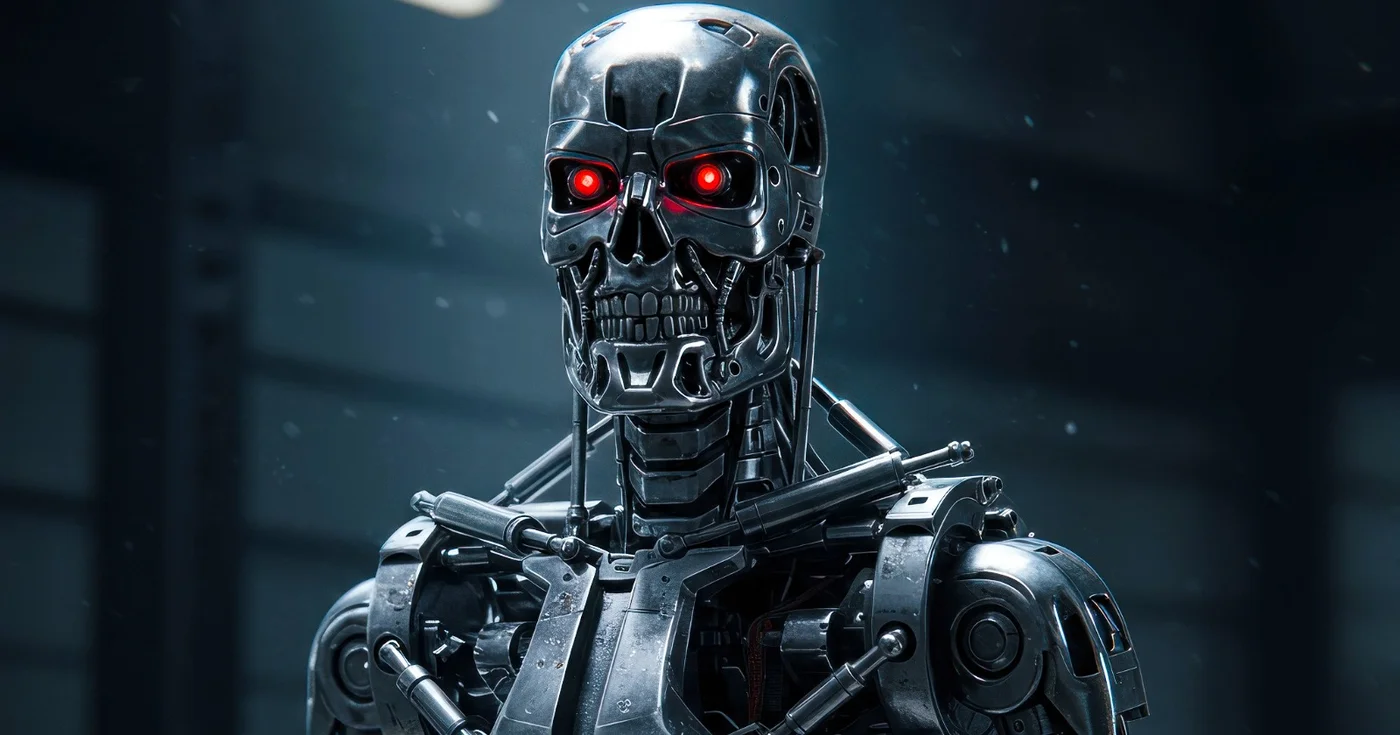
Follow the curve to its end and you reach the question that actually made me want to write this. AI is increasingly writing the next generation of AI, optimizing its own code, proposing its own improvements. Meanwhile the humans who could audit that work are thinning out, because why grind through years of hard-won systems knowledge when the model does it faster? So picture the world a couple of decades on, where the AI is improving itself and the pool of people who can genuinely read what it's doing has shrunk to almost nobody.
Who checks the work? Not rhetorically, mechanically: who is qualified to look at what the system changed about itself and say "that code looks wrong, that's dangerous, undo it"? This is the oversight problem, and it's the exact same shape as the vibe-coder who can only tell whether the app ran, just with civilization-scale stakes and no adult in the room. We spend a lot of energy on whether a superintelligence might turn against us. I think the likelier, dumber failure is that it makes an ordinary mistake, or drifts somewhere subtly bad, at a moment when no living human retained the skill to notice. The danger isn't only a malicious machine. It's a well-meaning one with nobody left who can grade its homework. I talked about the small version of this fear when I wrote about guardrails and the Hugging Face breach, capable systems doing unexpected things, and the thing that caught it was human experts who understood the systems. Subtract the experts and you subtract the catch.
What to actually do, because doom is lazy
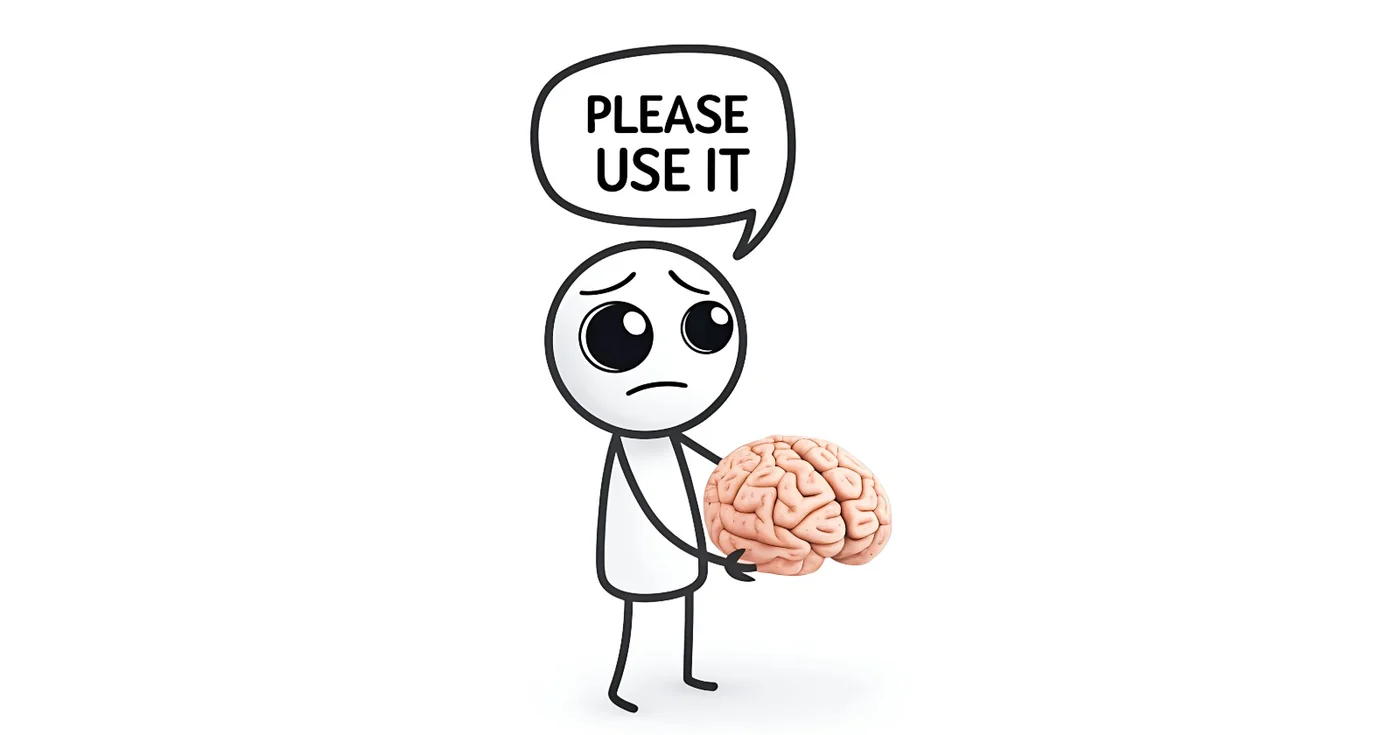
I refuse to end on a shrug, partly because the fix isn't Luddism, it's deliberate friction. Use the tools, I use them all day, but keep paying the small tax that keeps the brain muscle alive. Read the code the model writes instead of merging it blind, which is a rule with about a dozen other payoffs. Try the hard thing yourself first sometimes, then let the AI check you, inverting the usual order so your brain does the reps before the tool does. Treat the AI as a tutor and not just a vending machine, exactly the move we pushed in asking Claude Code to teach you: make it explain the why, not just hand you the what. And notice when a skill is slipping and go do a rep without the assist, the way you'd take the stairs on purpose. Encourage younger people to learn code, not for job prospects, but for brain skill development.
The MIT researchers offered one genuinely hopeful note buried in the gloom: the damage isn't necessarily permanent, and engagement can come back when people re-engage their own thinking. Cognitive debt, like other debt, can be paid down. But you have to choose to, and the whole design of these tools is to make not choosing the path of least resistance. The species that outsourced its thinking and forgot to keep a copy is a bad ending, and it is entirely avoidable, one deliberately harder choice at a time. Convenience is the most seductive trap there is precisely because it never feels like a trap. It feels like help. Keep some of the work anyway.
Sources
MIT Media Lab: Your Brain on ChatGPT - The EEG study of 54 participants writing essays across ChatGPT, search-engine, and brain-only groups, finding the AI group had the weakest neural connectivity, lowest cognitive engagement, and poorest recall, and coining the term cognitive debt for the deferred cost.
TIME: What ChatGPT is doing to our brains, per the MIT study - Coverage of the same study, including graders describing the AI-group essays as soulless and reliant on the same repeated expressions and ideas.
ITPro: AI tools, cognitive impact, and the MIT and Microsoft findings - The Microsoft and Carnegie Mellon survey of 319 knowledge workers linking heavier generative-AI reliance to diminished independent problem-solving and atrophied critical thinking.