 Paul
Paul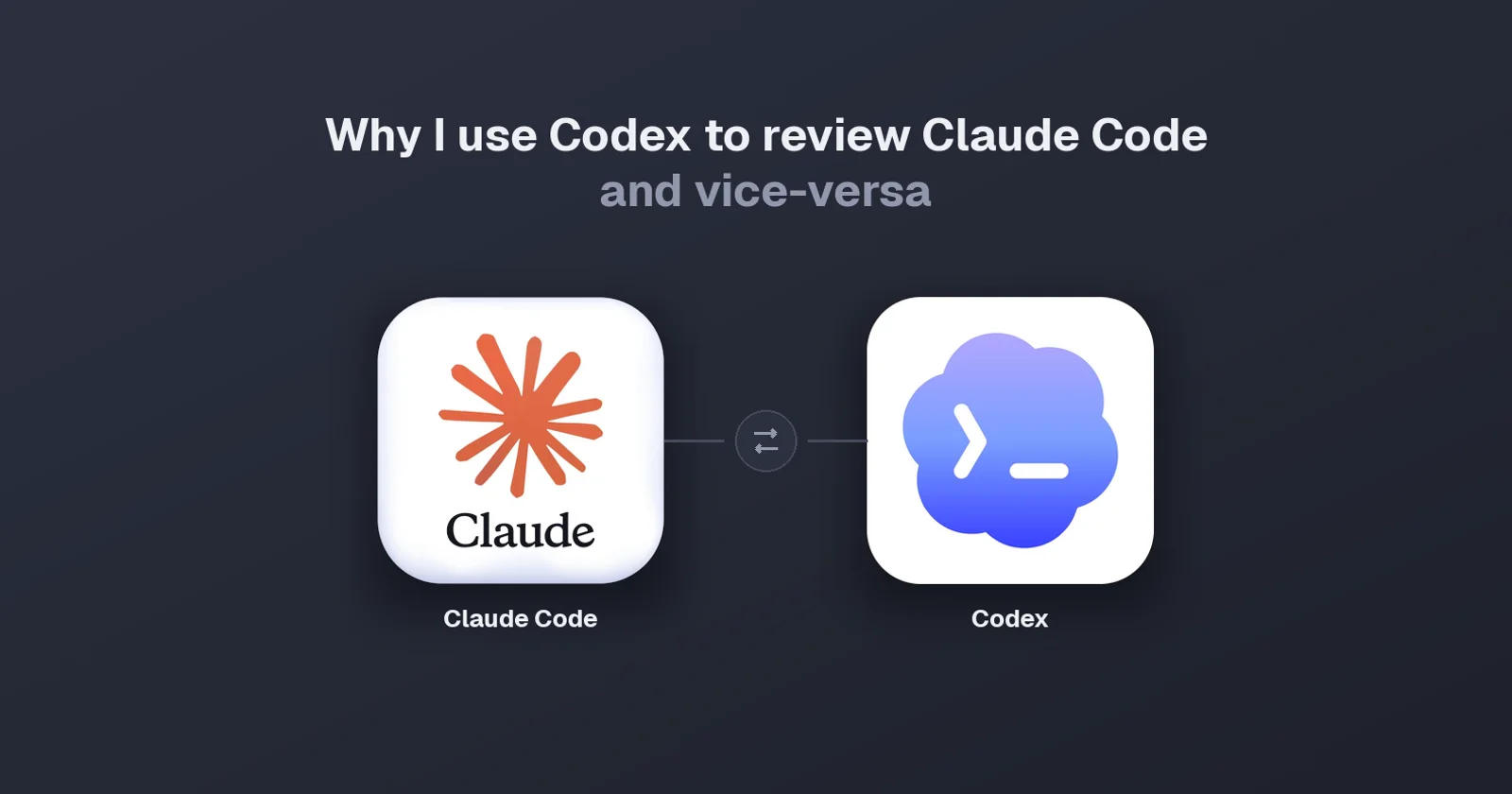
One of the workflow habits I've developed over the last year of building with AI coding tools is that I rarely let a single model's output go straight to production without a second model looking at it first. In practice this usually means that when Claude Code writes a meaningful chunk of code, I'll have Codex review it, and when Codex writes something, I'll have Claude Code review it. It sounds like extra work, and it is a little, but the habit has caught enough real problems that I've come to think of it as one of the higher-value things a solo founder building with AI can do. This post is about why cross-reviewing between models works, what it actually catches, and where the limits of the approach are.
I want to be upfront that this is not a magic technique and it does not replace your own judgment about your own code. What it does is add a cheap, fast layer of review that catches a specific category of problems, and for a solo founder who doesn't have human teammates to review pull requests, that layer is genuinely valuable. The logic is straightforward once you see it, and the practice is easy to adopt.
Why a second model catches things the first one misses
The core reason cross-review works is that different models have different blind spots. Claude Code and Codex are built by different companies, trained differently, and have different tendencies in the code they produce and the mistakes they make. When Claude Code writes something with a subtle flaw, that flaw often exists precisely because of some tendency in how Claude approaches the problem, and that same tendency means Claude is less likely to catch the flaw on its own review because the blind spot that produced the error also obscures it. A different model with different tendencies doesn't share that specific blind spot, so it sees the problem with fresh eyes.
This is the same reason human code review works, where the value isn't that the reviewer is smarter than the author but that the reviewer is different from the author and hasn't been staring at the same problem with the same assumptions. A second model brings a genuinely different perspective to the code, not because it's better but because it's not the same, and difference is most of what makes review valuable. Two models with different training will disagree about enough things that the disagreements themselves become a useful signal about where the code deserves a closer look.
There's also a subtler dynamic that helps, which is that a model reviewing code has no investment in defending that code when it didn't write it. When you ask a model to review its own output, there's a tendency toward justifying the choices it already made, because from the model's perspective those choices were the reasonable ones or it wouldn't have made them. A model reviewing another model's code is starting fresh, evaluating the code on its merits rather than re-deriving why it seemed correct the first time, and that detachment makes the review more honest. It's the difference between proofreading your own writing and having someone else proofread it.
What cross-review actually catches
The first category of problems cross-review reliably catches is logic errors that the writing model was confident about. AI coding tools are good but they make mistakes, and the dangerous mistakes are the confident ones, where the code looks clean and reasonable and runs without obvious errors but does the wrong thing in some case the model didn't think through. A reviewing model, working through the code fresh, will often spot the case the writing model missed, because it's evaluating what the code actually does rather than what it was intended to do.
The second category is missed edge cases, which is closely related but worth calling out separately. The model that writes a function is focused on making the main path work, and it's easy for either model to ship something that handles the happy path well and quietly mishandles empty inputs, unusual values, or error conditions. A reviewing model prompted specifically to look for edge cases will frequently surface the inputs the writing model didn't consider, and edge cases are exactly the kind of thing that doesn't show up in casual testing but does show up once real users arrive.
The third category is security and safety issues, where one model might generate code that works but has a vulnerability, an unsafe default, or a pattern that exposes something it shouldn't. A reviewing model asked to look specifically at security will catch a meaningful fraction of these, and for a solo founder without a security team, that second look is a real safety net. It doesn't replace actually knowing security fundamentals yourself, but it adds a layer.
The fourth category is the divergence cases, where the two models simply disagree about how something should be done, and the disagreement itself is the value. When the reviewing model pushes back on an approach the writing model took, that's a flag telling you this part of the code is a genuine decision point worth your attention rather than something you can rubber-stamp. Sometimes the writing model was right, sometimes the reviewer was right, and sometimes the truth is a third option, but in all cases the disagreement has told you where to actually think rather than skim.
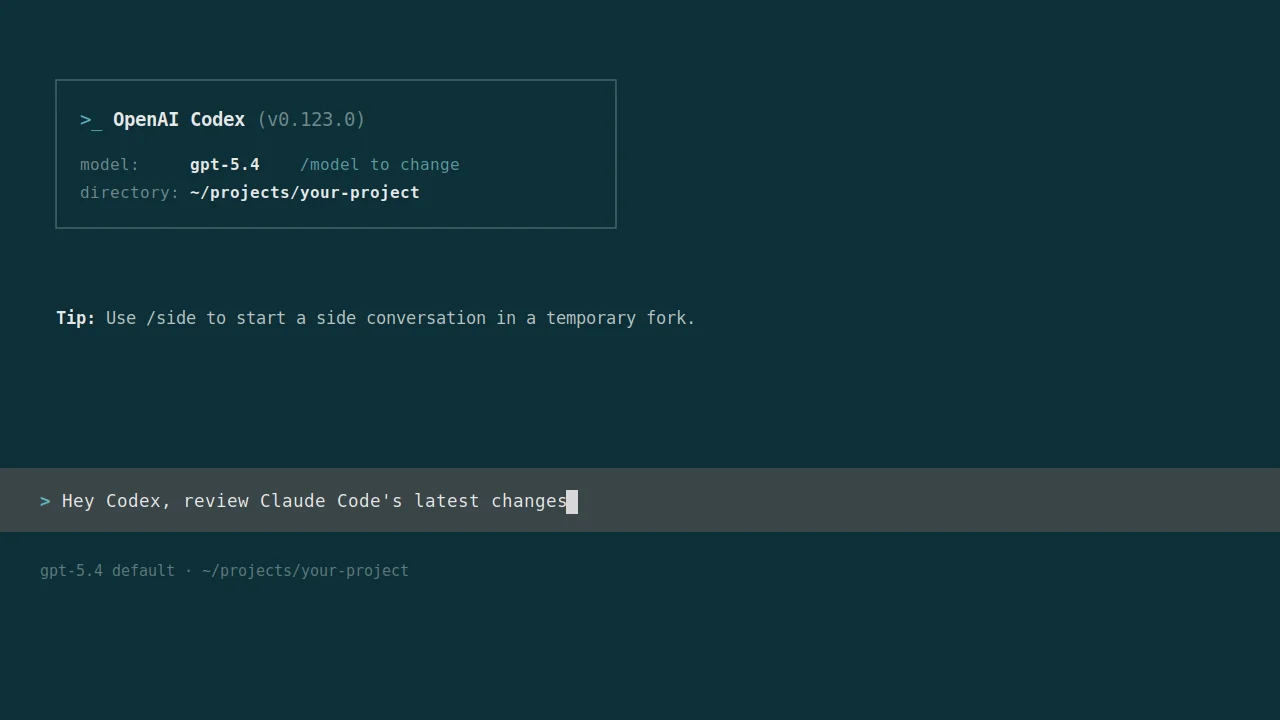
How I actually run it
The practical workflow is simpler than it sounds. When one model produces a meaningful piece of code, a new feature, a non-trivial function, a piece of logic that matters, I take that code to the other model and ask for a review with a specific focus rather than a vague once-over. A vague "review this code" produces a vague response, while asking the reviewing model to specifically look for logic errors, edge cases, security issues, and anything it would have done differently produces something genuinely useful.
I don't do this for everything, because cross-reviewing a trivial change is a waste of time and tokens. The habit is calibrated to the stakes, where small or low-risk changes just ship, and the cross-review is reserved for code that's complex enough to hide a real bug, important enough that a bug would actually hurt, or central enough to the platform that it's worth getting right. The judgment about what deserves review is itself a skill, and it's roughly the same kind of upfront discipline I apply to deciding which platform ideas are worth building in the first place, where the goal is to spend serious effort on the things that genuinely warrant it and skip the ones that don't.
When the reviewing model flags something, I don't just hand the flag back to the writing model and let the two of them sort it out automatically, because that's how you end up with changes you don't understand. I read the flag, decide whether I think it's right, and then direct the fix myself. The two models are providing input to my decision, not making the decision, and keeping that distinction clear is important because the entire value of the review collapses if I'm just letting two AIs negotiate code I'm not actually evaluating.
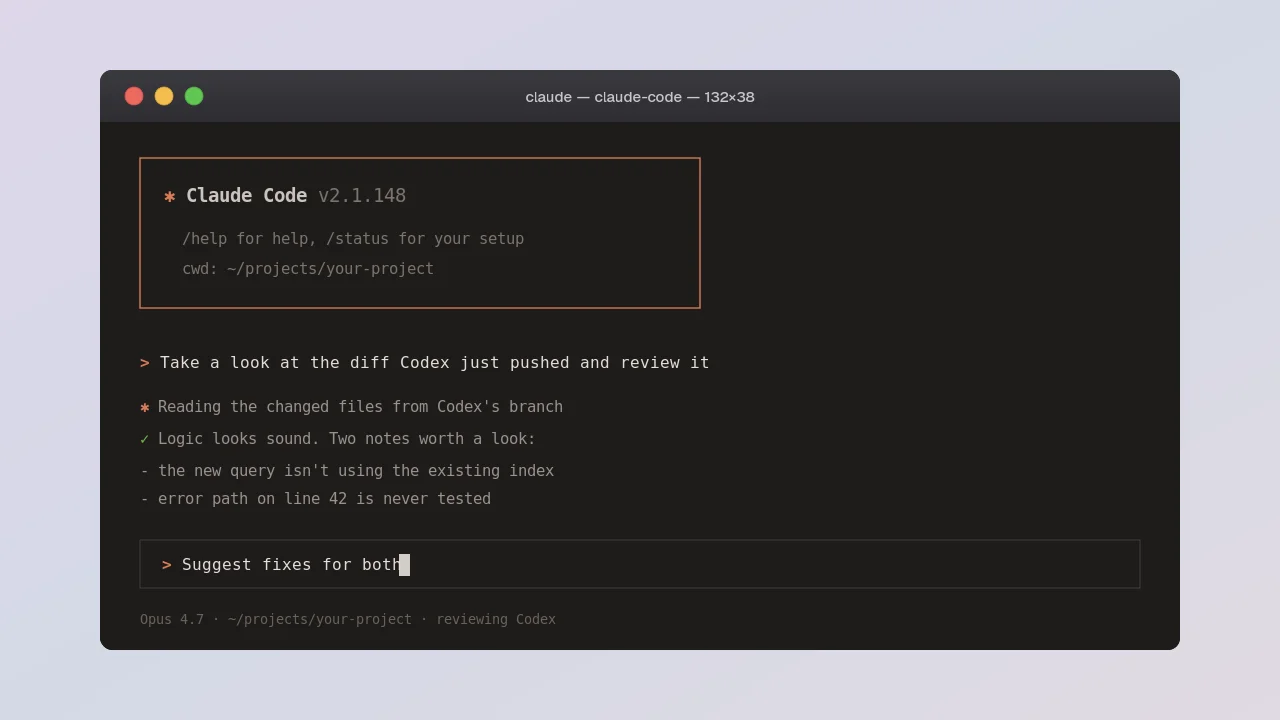
The limits worth knowing
Cross-review is useful but it's not complete, and it's worth being honest about what it doesn't do. It doesn't catch everything, because both models can share a blind spot, and a problem that both Claude Code and Codex would miss for the same reason will sail through cross-review just as easily as it would through single-model review. The two models are different but they're not opposites, and there's a category of mistakes that AI coding tools in general tend to make where having two of them doesn't help.
It also doesn't substitute for understanding your own code, which is the limit that matters most. If you can't evaluate the reviewing model's feedback yourself, then cross-review just gives you two opinions you can't adjudicate between, and you're back to trusting the tools blindly, just with an extra step. The technique amplifies the judgment of someone who has enough knowledge to use it, and it doesn't manufacture judgment for someone who doesn't. Cross-review is a tool for builders who can read code, not a replacement for being able to read code, which is part of why I think every solo founder building with AI needs a baseline of real coding and devops skills underneath the tools.
And it costs something, both in time and in tokens, where running a meaningful piece of code through a second model is a real expenditure of both. That cost is why the technique should be calibrated to stakes rather than applied universally, and it's why the judgment about what deserves review is part of the skill. Used well, the cost is small relative to the value of the bugs it catches. Used indiscriminately, it's a tax on every change for diminishing returns.
Why this matters for solo founders specifically
The reason this technique is particularly valuable for solo founders is that solo founders don't have the thing it partially replaces, which is human code review. A developer on a team gets their code looked at by colleagues, and that second set of eyes catches a meaningful fraction of problems before they reach production. A solo founder building alone has no colleagues, which means that without something filling the gap, every piece of code goes to production having been seen by exactly one mind. Cross-review between models is a partial substitute for the missing teammate, and a partial substitute is a lot better than nothing.
It also fits the broader principle that the best way to build with AI tools is from a position of using them deliberately rather than passively. Cross-reviewing is a deliberate practice, where you're not just accepting whatever the first model produces but actively building a check into your workflow, and that deliberateness is most of what separates founders who build well with AI from founders who just generate code and hope. The habit takes a few extra minutes per significant change, and in exchange it catches a category of bugs that would otherwise have found you later, at a worse time, in front of real users.
If you're building with one AI coding tool and you don't currently have a second one in your workflow at all, this is a genuine reason to add one, separate from the resilience argument about not being dependent on a single provider, which I've explored more fully in the thought experiment about what would happen if every AI coding tool disappeared overnight. The second tool earns its place not just as a backup but as a reviewer, and the two roles together make a stronger case for keeping more than one AI coding tool in your toolkit than either role makes alone. If this kind of multi-tool workflow has helped you ship something interesting, you can add it to the ClaudeFolio directory alongside the rest of the projects built with AI coding tools, or just browse what other builders have shipped for ideas on how other solo founders are using these tools together.