Every Claude Code session runs on one of four model families, and the default isn't always the right one. Here's how Anthropic's current lineup compares and which one to reach for, based on Anthropic's own models overview and the Claude Code model docs.
Start with the default. According to the docs, Claude Code on "Pro, Max, Team, Enterprise, and Anthropic API" accounts "defaults to Opus 5.5." Anthropic's general advice for choosing matches that: “If you're unsure which model to use, start with Claude Opus 5.5 for most workloads.”
The four models side by side
| Model | Speed | API price (input / output per million tokens) | Context | Default effort |
|---|---|---|---|---|
| Fable 5.1 | Slower | $10 / $50 | 1M tokens | High |
| Opus 5.5 | Moderate | $4 / $20 | 1M tokens | Medium |
| Sonnet 5.5 | Fast | $2 / $10 | 1M tokens | High |
| Haiku 4.5 | Fastest | $1 / $5 | 200K tokens | Not supported |
On a subscription you don't pay these per-token prices, but the ratios still matter, because a bigger model burns through your usage limits faster for the same work.
When to use each one
Opus 5.5 is the everyday default and the right pick for most real work. The docs describe the opus alias as the model "for complex reasoning tasks," and Opus 5.5 is also the first Opus that ships at medium effort, which makes it cheaper to run than you would think. We covered how it feels in practice after launch. Currently I use Opus 5.5 for everything as I feel it's even better than Fable 5.1.
Sonnet 5.5 is the "daily coding tasks" model in the docs. It's faster and half the price of Opus, so it's a good choice for routine feature work, clear bug fixes, and long sessions where you'd rather not spend Opus-level usage on every edit.
Haiku 4.5 is for "simple tasks." Quick questions, renaming things, small edits, and subagents doing narrow jobs. Its 200K context window is the smallest of the four, so it's the wrong pick for anything that needs to hold a big codebase in mind.
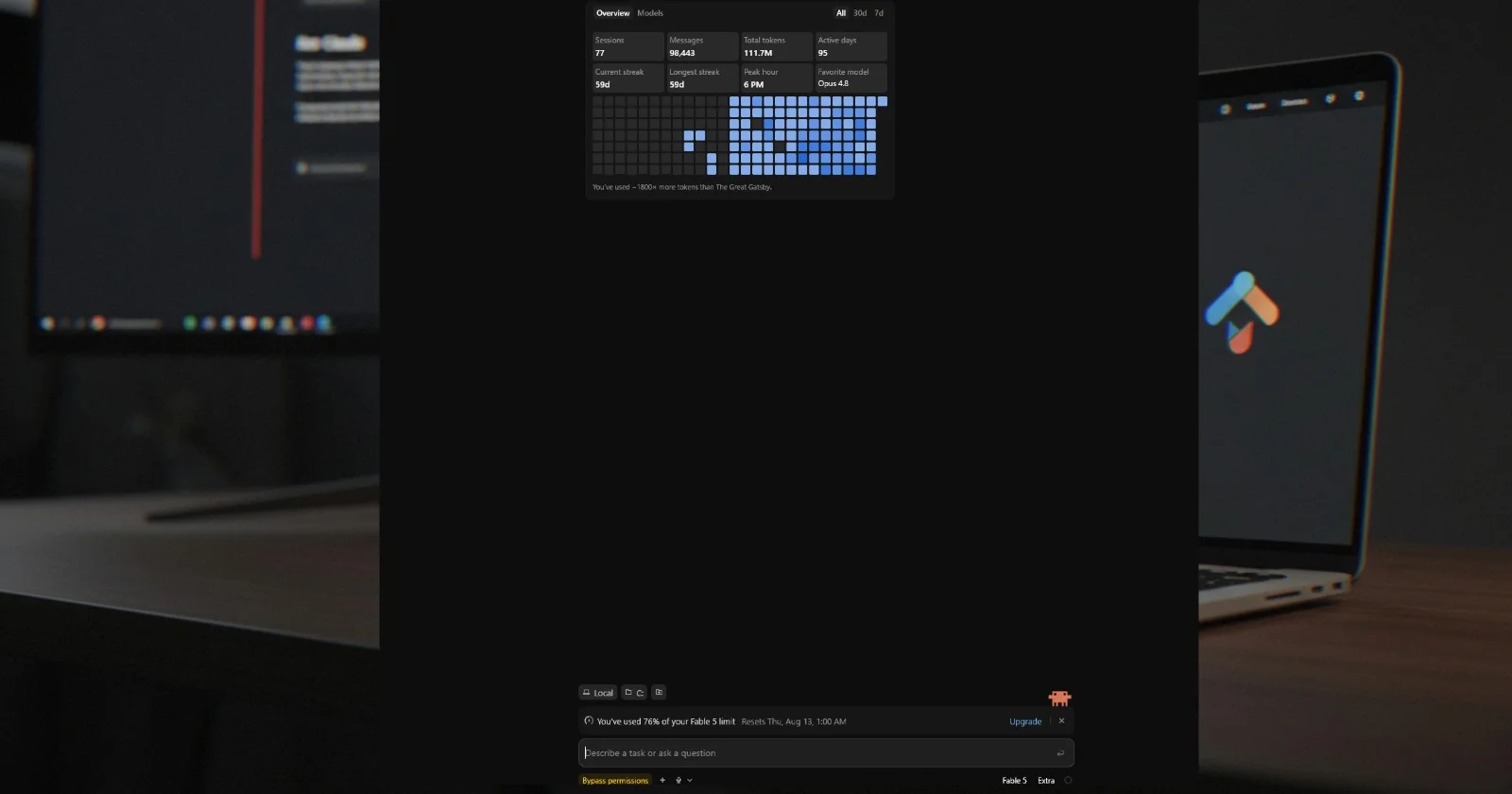
Fable 5.1 is the top model, for the hardest and longest problems. Anthropic's guidance is to use it "for demanding reasoning and long-horizon agentic work, or when your evals on Claude Opus 5.5 at higher effort still fall short." It's never selected for you: "Fable models are not the account-type default on any plan or provider." On subscriptions, access comes with its own usage terms, so it's worth saving for problems Opus can't crack.
How to switch, and one shortcut worth knowing
Type /model in a session to open the picker, or /model sonnet to switch directly. You can also launch with claude --model opus, set the ANTHROPIC_MODEL environment variable, or put "model" in your settings file.
The shortcut is the opusplan alias. The docs describe it as a hybrid: "In plan mode: uses opus for complex reasoning and architecture decisions. In execution mode: automatically switches to sonnet for code generation and implementation." That puts the bigger model on the planning, where it matters most, and the cheaper one on typing out the plan.
One more thing people notice without understanding: when a message gets flagged by Anthropic's cybersecurity or biology safeguards, Claude Code can hand that turn to an older model. The docs list Opus 5.5 falling back to Opus 4.8 for flagged cybersecurity content. You can turn that behavior off in /config.
The short version: leave it on Opus 5.5, drop to Sonnet 5.5 for routine work when you're watching your limits, use Haiku for tiny jobs and subagents, and bring in Fable only when Opus is stuck.
Sources
Anthropic: Models overview - The current lineup of Fable 5.1, Opus 5.5, Sonnet 5.5, and Haiku 4.5 with comparative latency, pricing, context windows, default effort levels, and the guidance to start with Opus 5.5 and use Fable 5.1 for demanding long-horizon work.
Claude Code docs: Model configuration - Opus 5.5 as the default for Pro, Max, Team, Enterprise, and API accounts, the opus, sonnet, haiku, fable, and opusplan aliases, Fable never being a default, the ways to switch models, and automatic model fallback for flagged content.