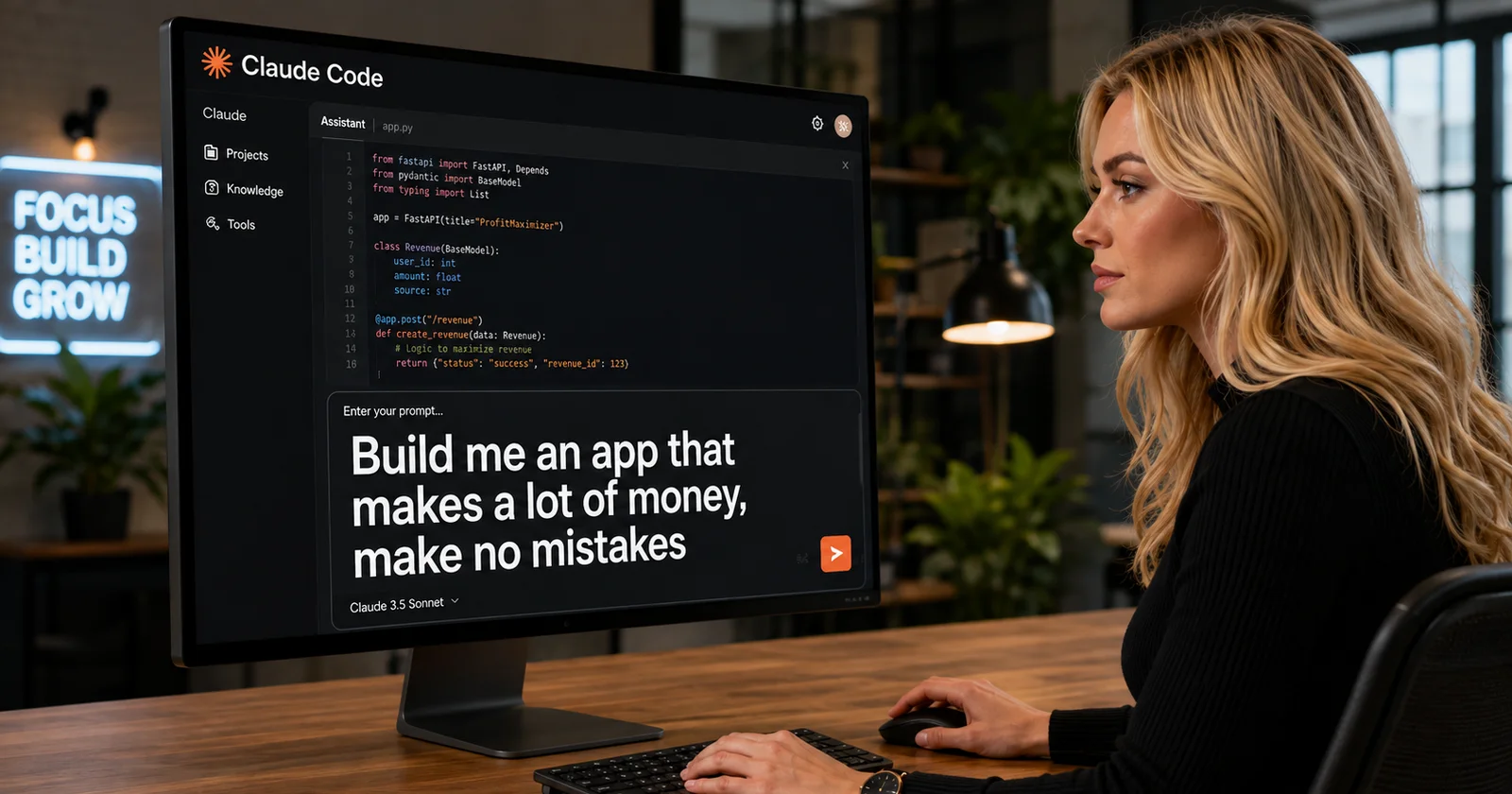
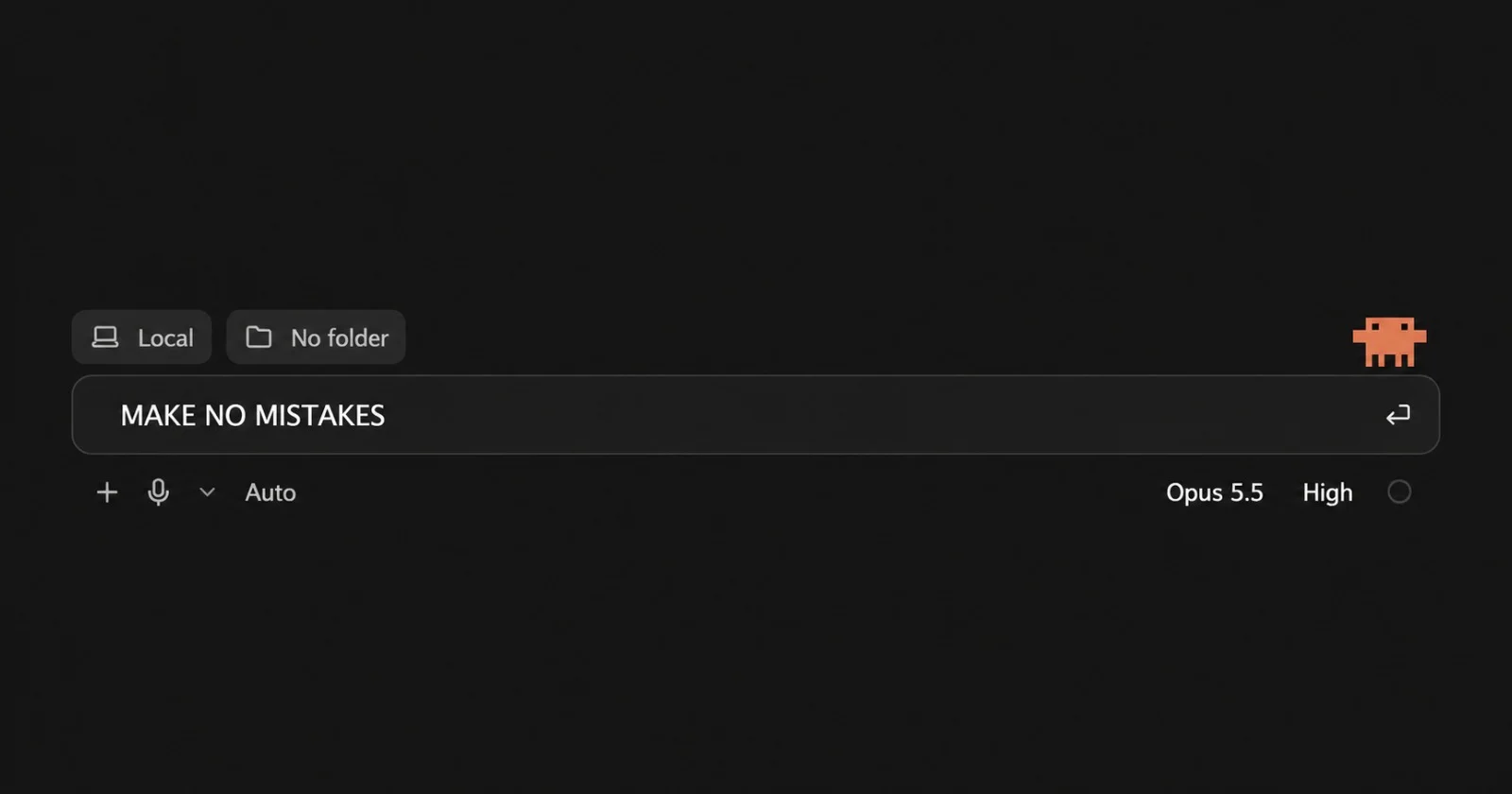
You've seen the memes and comments. Somebody types a one-line request for an entire app, something like "Build me GTA7" and then adds three more words at the end: "make no mistakes."
It's become one of the running jokes of the year in AI coding. The physics blogger behind 4 Gravitons calls it a prompt that's become a meme "used to make fun of AI-using 'vibe coders.'" A request that would take a human team months or years, written in one sentence, followed by a magic phrase meant to cover every missing requirement.
Then in early May, investor Marc Andreessen shared the custom prompt he uses with AI, and people pointed out that one of its lines was a similar one: "Never hallucinate or make anything up."
So why do people write it? It's not as dumb as it looks, and the reasons say something about how people think these tools work.
It's what you'd say to a robot
If you're handing a big job to a contractor or a new hire and it matters, you tell them it matters. "Be careful with this one." "Please double-check everything." Chat tools feel like talking to someone, but at the same time they really can't talk back so you same something more blunt like “make no mistakes.”
Additionally, emotional prompts seem to do something. In 2023, a group of researchers published a paper called Large Language Models Understand and Can be Enhanced by Emotional Stimuli. They added emotional lines to prompts, the "this is very important to my career" style, and reported "8.00% relative performance improvement in Instruction Induction and 115% in BIG-Bench." Around the same time people were swapping tricks like ALL CAPS instructions and offering the model an imaginary tip. Some of it worked a little on the models of that year, and it all got passed around as folk wisdom long after.
And the last reason is the honest one. If you can't read the code yourself, "make no mistakes" is the only lever you have. You can't check the database logic, so you ask for it to be right and hope.
Why it doesn't do much now
An LLM model doesn't have a careful mode that it's holding back until you ask. It generates the most likely next text given everything in the prompt. The 4 Gravitons post puts the downside well: "If you tell an AI 'make no mistakes' or 'do not hallucinate', you're making it more likely to generate the kind of story that begins, 'the AI was instructed to make no mistakes'." You've added a line about perfection without adding a single piece of information it could use to be more correct.
Anthropic's own prompting guide points the other way from the meme on almost every count. It says to explain why an instruction matters, and gives the example of turning "NEVER use ellipses" into a sentence explaining the output will be read aloud by a text-to-speech engine that can't pronounce them. It says to tell Claude what to do instead of what not to do. And for recent models it warns that aggressive wording can backfire. Where you might once have written "CRITICAL: You MUST use this tool when...", the guide suggests plain wording like "Use this tool when..." because newer models may now overreact to it.
"Make no mistakes" is all of the things the guide says to avoid, packed into three words. It's a negative instruction with no reason attached, shouted at a model that's already trying to be right.
What to write instead
The fix is to replace the wish with information. A few things that actually move the result:
Say what "right" means. Instead of "make no mistakes," say which parts can't break. "Existing users must still be able to log in. Don't change the database schema." That gives the model something to check against.
Give it a way to check. The guide suggests having Claude write tests before the work and keep them around, since a test is a mistake detector that runs on its own. On Opus 5, don't also tell it to verify its work, since the guide notes that model already does that and extra instructions cause over-verification.
Make it look before it answers. Most of the mistakes that hurt are made-up details about code the model never opened. The guide's own sample prompt for this starts with "Never speculate about code you have not opened." That's the useful version of "don't hallucinate," because it tells the model what to do: read the file first.
Break the job up. A one-sentence SaaS request fails because it's one sentence. Smaller steps with a check between each one catch errors while they're still small, which is most of running a session that doesn't go off the rails.
If there's a rule you keep typing, like "don't touch the payments code," put it in your CLAUDE.md once so it's there every session.
None of this makes mistakes impossible. You'll still need to catch the ones that slip through, and reading the diff is still the step that catches the most. But a prompt that says what matters and why will beat "make no mistakes" every time, and the meme will keep being funny because people will keep writing it anyway.
Sources
4 Gravitons: Make No Mistakes - The May 15, 2026 post describing "make no mistakes" as a meme used to mock vibe coders, Marc Andreessen's custom prompt including "Never hallucinate or make anything up," and the argument that such instructions make the model more likely to generate a story about an AI told to make no mistakes.
Li et al.: Large Language Models Understand and Can be Enhanced by Emotional Stimuli - The 2023 EmotionPrompt paper reporting an 8.00 percent relative improvement in Instruction Induction and 115 percent in BIG-Bench from adding emotional stimuli to prompts.
Anthropic: Prompting best practices - Guidance to add context explaining why an instruction matters with the ellipses example, to tell Claude what to do instead of what not to do, to dial back aggressive language like "CRITICAL: You MUST" on recent models, to have Claude write and keep tests, the note that Opus 5 over-verifies when told to verify, and the sample prompt telling Claude never to speculate about code it has not opened.