In 2004, the year Google went public, co-founder Larry Page sat down with Playboy and explained what made his company different from the web portals of the day. His answer was simple: "We want you to come to Google and quickly find what you want. Then we're happy to send you to the other sites. In fact, that's the point."
He went further. "We want to get you out of Google and to the right place as fast as possible. It's a very different model." The portals, he said, did the opposite: "The portal strategy tries to own all of the information."
Hmm… more than 20 years later, reading that latter quote today and it sounds like a description of Google now.
A search engine is supposed to send you somewhere
Sending you somewhere… that was the whole point, and for a long time Google did it better than anyone. You typed a question, you got very relevant links, you clicked one, and you left satisfied. Google made its money on the ads next to those links, and the websites made theirs on the visitors Google sent. Both sides needed each other, and the deal just worked and it was harmonious.
The test for whether something is a search engine is the one that Larry Page set himself: does it try to get you out as fast as possible? By that test, Google has been failing for years.
Everything new points back to Google
This all happened gradually over time. First came the answer boxes: the weather, the sports scores, the conversions, the definitions. So people didn't have to go to ESPN to check sports scores or the Weather Channel to check the weather. Then the shopping results, the flight prices, the hotel listings, the maps, the YouTube carousels. Each one was useful depending on who you're asking but each one also answered the question on Google's page where you didn't have to go to another website.
By 2024 the effect was measurable. SparkToro's zero-click study, built on clickstream data from Datos covering September 2022 to May 2024, found that "58.5% of American Google searches resulted in zero clicks." Of the clicks that did happen, "almost 30% of all clicks go to platforms Google owns." The headline number: "for every 1,000 searches on Google in the United States, 360 clicks make it to a non-Google-owned, non-Google-ad-paying property."
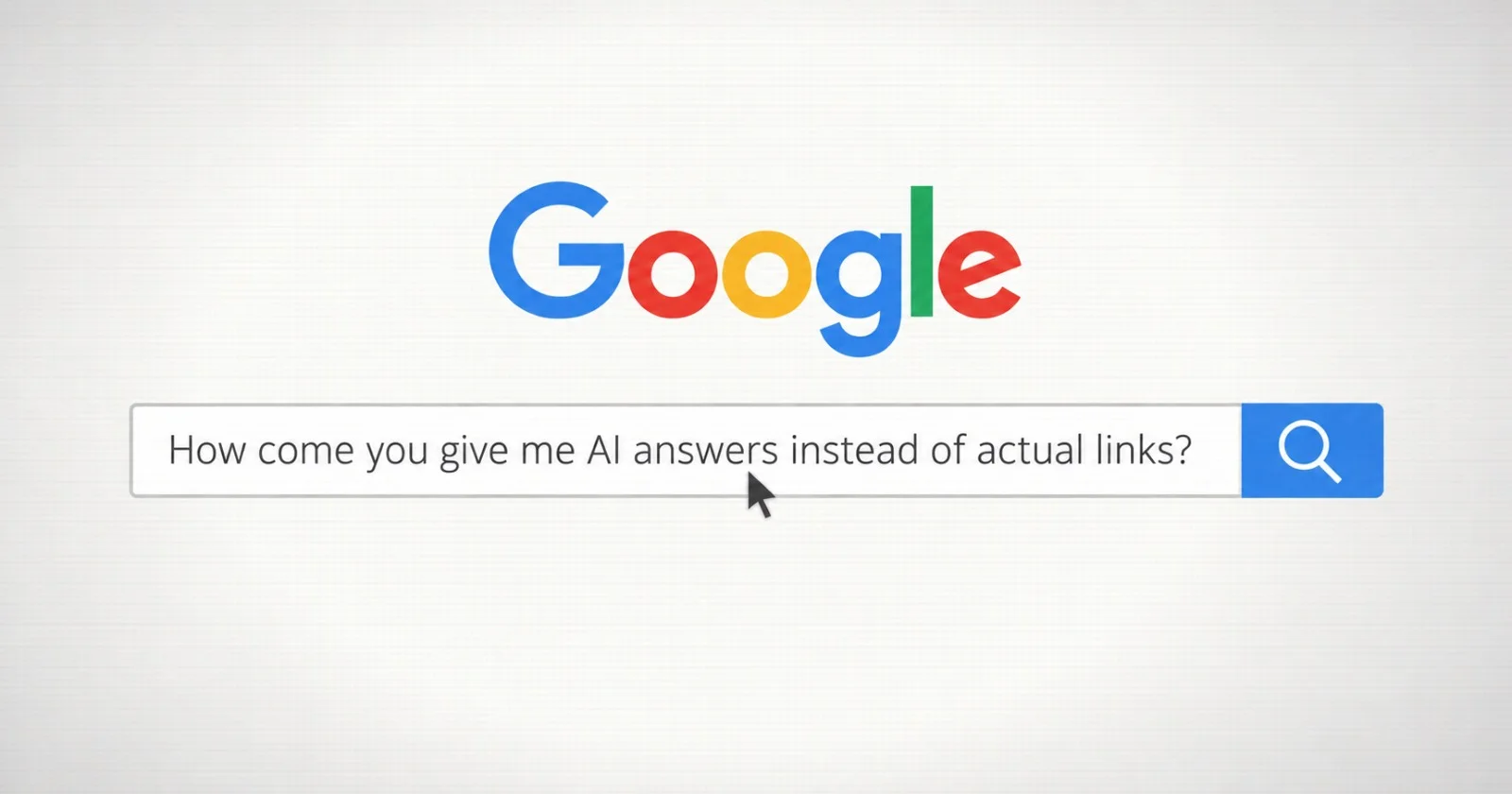
Then things went over 9,000 when AI showed up. AI Overviews now write an answer at the top of the Google search results page, built and getting data from all the hardworking sites below it, so you don't even need to visit them. We went through what that did to clicks earlier this year. And on May 20, 2025, Google rolled out AI Mode to everyone in the United States, describing it as its "most powerful AI search." Its earlier testing pitched it to people who want an "end-to-end AI Search experience." End to end is the opposite of sending you somewhere. Page called that the portal strategy, it was the thing he said Google was built against. Yeah, just like their motto was once “Don't Be Evil.”
Google says the clicks are fine
*Chuckles* In August 2025, Liz Reid, who runs Google Search, wrote that "total organic click volume from Google Search to websites has been relatively stable year-over-year," and that Google was sending "slightly more quality clicks to websites than a year ago," meaning clicks where people don't quickly come back. She said reports of big drops were "often based on flawed methodologies."
What the post didn't include was any data and just “trust me bro.” No numbers, no breakdown, nothing a publisher could check against its own analytics. Google is the only company that can see every search and every click, and it's asking everyone else to take its word for it.
A portal with a search box
I don't think this happened because Google forgot how search works. I think it happened because keeping you is worth more now to them than sending you away. Every search that ends on Google's page is a search where Google controls the ads, the answer, and the next thing you see. But that's also evil.
That's greed in the plainest sense: taking more of something you already dominate and not helping the people that actually do the research and creating the articles on their website by not sending them any clicks. On August 5, 2024, a federal judge ruled that Google illegally maintained its monopoly in general search. Can you say I'm not gonna be on Google? Who's the alternative, Bing or Yahoo? They both get paltry traffic compared to Google. When there's nowhere else most people go, there's no pressure to keep sending them away.
The websites still work hard and write the answers Google shows. They now see way less of the traffic that used to actually pay for writing them. Now, these websites are thinking if it's even worth it anymore.
In 2004, Page said putting your own content above the web was "a conflict of interest, analogous to taking money for search results," and that "Google conscientiously tries to stay away from that." Twenty-two years later, Google's newest search product is designed so you never have to leave.
Sources
Playboy interview with Sergey Brin and Larry Page (2004), via Kottke - Larry Page's statements that Google wants to send users to other sites quickly, that the portal strategy tries to own all of the information, and that favoring a site's own content is a conflict of interest Google tried to stay away from.
SparkToro: 2024 Zero-Click Search Study - Datos clickstream data from September 2022 to May 2024 showing 58.5 percent of US Google searches ending in zero clicks, almost 30 percent of clicks going to Google-owned platforms, and 360 of every 1,000 US searches reaching a non-Google, non-advertiser site.
Google: AI Mode update - The May 20, 2025 rollout of AI Mode to everyone in the US and its description as Google's most powerful AI search and an end-to-end AI search experience.
Google: AI in Search is driving more queries and higher quality clicks - Liz Reid's August 6, 2025 statements that organic click volume has been relatively stable, that Google sends slightly more quality clicks, and that third-party reports rely on flawed methodologies.
Goodwin: Google is an illegal monopoly, federal court rules - Judge Amit Mehta's August 5, 2024 ruling that Google illegally maintained its monopoly in general search.