
This is one of the most common questions people ask when they're deciding which AI to build with or pay for, and the honest answer is more complicated than either side of the internet wants it to be. The short version is that the two are close enough now that "better" depends almost entirely on what you're using it for, and anyone telling you one wins outright across the board is selling you a simpler story than the actual data supports. This post is my attempt at the honest version, with the upfront disclosure that I build with Claude Code every day and obviously have a preference, so you should weight my read against the independent sources rather than just taking my word for it.
I'll go through where each one genuinely leads, where the comparison is basically a tie, and what most people who use both actually end up doing, because the real answer for a lot of users isn't "pick the winner" but something more useful than that.
They're closer than the hype suggests
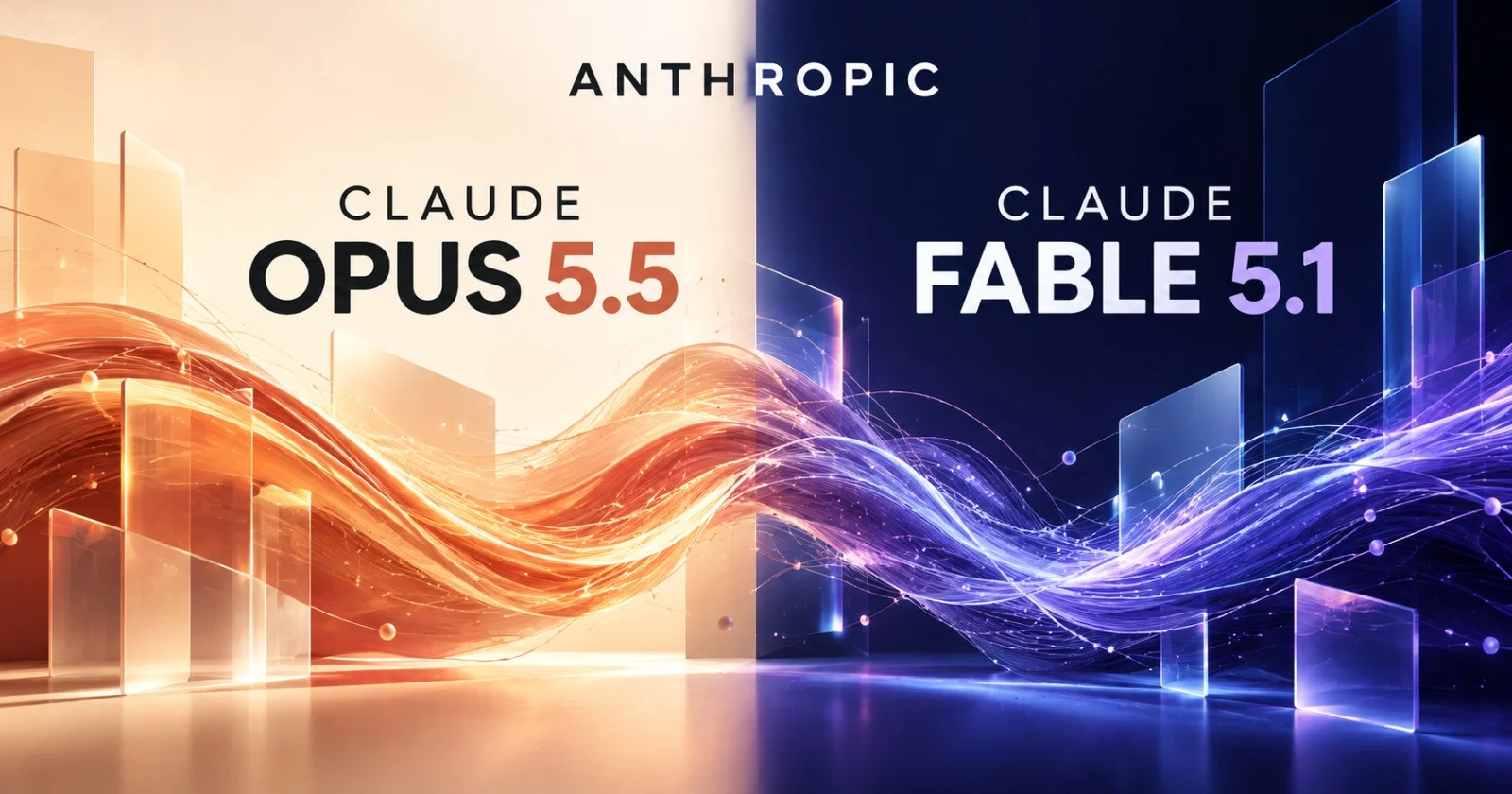
The first thing worth understanding is that at the top of the market, the flagship models from each company are remarkably close on general capability. Independent aggregators that combine many benchmark sources have put the current flagship Claude and GPT models within a couple of points of each other on overall quality, and the reasonable conclusion from that is that the two have reached approximate parity on general-purpose tasks. The days when one model was obviously and broadly smarter than the other, if they ever really existed, are not the days we're in now.
What that means in practice is that the differences have moved from the general to the specific. Instead of one model being better at everything, each model has carved out areas where it leads, and the right question is no longer "which is smarter" but "which is better at the specific thing I need." That's a less satisfying answer than a clean winner, but it's the accurate one, and it's also more useful because it points you toward picking based on your actual work rather than on a leaderboard ranking that may not reflect what you do.
It's also worth keeping in mind that these models leapfrog each other constantly. Every few months one company ships a new flagship that retakes some benchmark lead, and the rankings reshuffle, so any specific claim about which model is ahead on which benchmark is a snapshot rather than a permanent truth. Building your whole workflow around one model being permanently ahead is a mistake, because the lead changes hands regularly and the gaps at the top are narrow enough that they rarely justify strong loyalty.
Where Claude tends to lead
Claude's strongest relative area is coding, which is part of why it's become so popular with developers and solo founders. On SWE-bench Verified, the most widely cited benchmark for real-world coding tasks, Claude has held a narrow lead, and it has generally ranked at or near the top of crowdsourced coding leaderboards where developers vote on real outputs. The advantage shows up most clearly in complex work like multi-file changes and architectural reasoning across large codebases, which is the kind of thing that matters when you're working on a real project rather than generating a snippet.
I want to be honest about a nuance here that often gets lost, because it matters for how much weight to put on the coding numbers. The benchmark scores from different models are frequently not produced using the same test harness, where differences in scaffolding, retry policies, and the agentic loop around the model can swing the results by several percentage points. That means a narrow lead on a coding benchmark should be read as directional rather than as a precise measurement, and the genuinely correct move is to test both models on your own codebase rather than trusting a leaderboard gap of a point or two. The headline takeaway that Claude tends to edge out on coding is real, but the margin is narrow enough that your own experience should outweigh the benchmark.
Claude also tends to lead on careful reasoning benchmarks, particularly the PhD-level science reasoning tests where it has posted some of its widest margins over competing models. And on writing, reviewers consistently describe Claude's prose as more natural and better at matching tone and holding nuanced ideas in tension, where competing models tend to flatten complex prompts into simpler interpretations. If your work is heavy on code, long-form writing, or precise reasoning, those are the areas where Claude's relative strengths concentrate.
Where GPT tends to lead
The clearest advantages on the GPT side are multimodal features and ecosystem breadth, and these are genuine advantages that Claude doesn't currently match. ChatGPT has image generation, voice conversations, web browsing, and a broad plugin and app ecosystem built into a single interface, which means if you want to generate an image, search the web, have a spoken conversation, and write code all in the same chat, ChatGPT is the option that does all of that in one place. For a lot of general-purpose users, that breadth is worth more than a benchmark lead on coding they're not doing.
On the coding side, GPT isn't just a runner-up either, and it has its own areas of strength. On the harder, contamination-resistant variants of coding benchmarks, GPT has reportedly posted wider leads, and OpenAI's Codex tooling tends to win on speed-oriented terminal benchmarks and tight integration with certain automated workflows. If your work involves a lot of CLI automation, fast autonomous task execution, or the kind of tool-use-heavy work where speed and precise file navigation matter most, GPT's tooling is genuinely competitive and sometimes ahead.
The general pattern is that GPT tends to be the stronger all-rounder for varied workloads where you don't want to switch tools, and the stronger choice when multimodal capability is part of what you need. It's less that GPT is worse at any one thing and more that its strengths are spread across a broader surface area, where Claude's strengths are concentrated more narrowly but run deeper in those specific areas.
What most people who use both actually do
The recommendation that most independent reviewers land on, after they've gone through all the benchmarks and the category-by-category breakdowns, is the same one that surprises people who came looking for a single winner: use both. At the same monthly price for each consumer plan, running both subscriptions and using each tool for what it's best at costs less than a single premium tier of either one, and you get the strengths of both rather than committing to one set of tradeoffs.
This isn't a cop-out answer, it's actually the smart play once you accept that the models are close and differentiated by domain rather than separated by overall quality. A developer might use Claude for the heavy coding and architectural work and reach for ChatGPT when they need an image generated or a quick web search in the same conversation. A writer might draft in Claude for the prose quality and use ChatGPT for the structured, high-volume content where its strengths fit better. The people getting the most out of AI right now generally aren't loyalists to one model, they're running two or three and routing each task to whichever tool handles it best.
There's also a real technical benefit to using more than one model that goes beyond just picking the right tool per task, which is that you can use one model to check the other's work. Having a second model review code or writing that a first model produced catches a meaningful category of mistakes, because the two models have different blind spots and a problem one model introduces is often exactly the kind of thing the other one catches. The multi-model approach isn't just about features, it's a genuine quality improvement when you use the models to cross-check each other.
The honest bottom line
If you forced me to give a single recommendation, it would be shaped by what you're doing rather than a blanket pick. If your primary work is coding, long-form writing, or careful reasoning, Claude is a strong default and the reason it's become the tool of choice for so many developers and solo founders is real rather than hype. If you want an all-in-one assistant that handles images, voice, web search, and a broad ecosystem in one place, ChatGPT covers more surface area and is the more versatile single choice. And if you can swing both, using each for its strengths is genuinely the best outcome available.
The thing I'd most want you to take away is that the leads at the top are narrow, the models trade places with every release, and the right answer is much more about your specific workflow than about which model is abstractly "better." I build with Claude and I'm happy with that choice, but I'd be doing you a disservice if I told you it was a blowout, because it isn't, and the honest version of this comparison is that two excellent tools have ended up close enough that the interesting question is how to use them well rather than which one to crown. Test both on the work you actually do, trust what you see over what any benchmark or any blog post tells you, and don't be afraid to keep both in your toolkit.