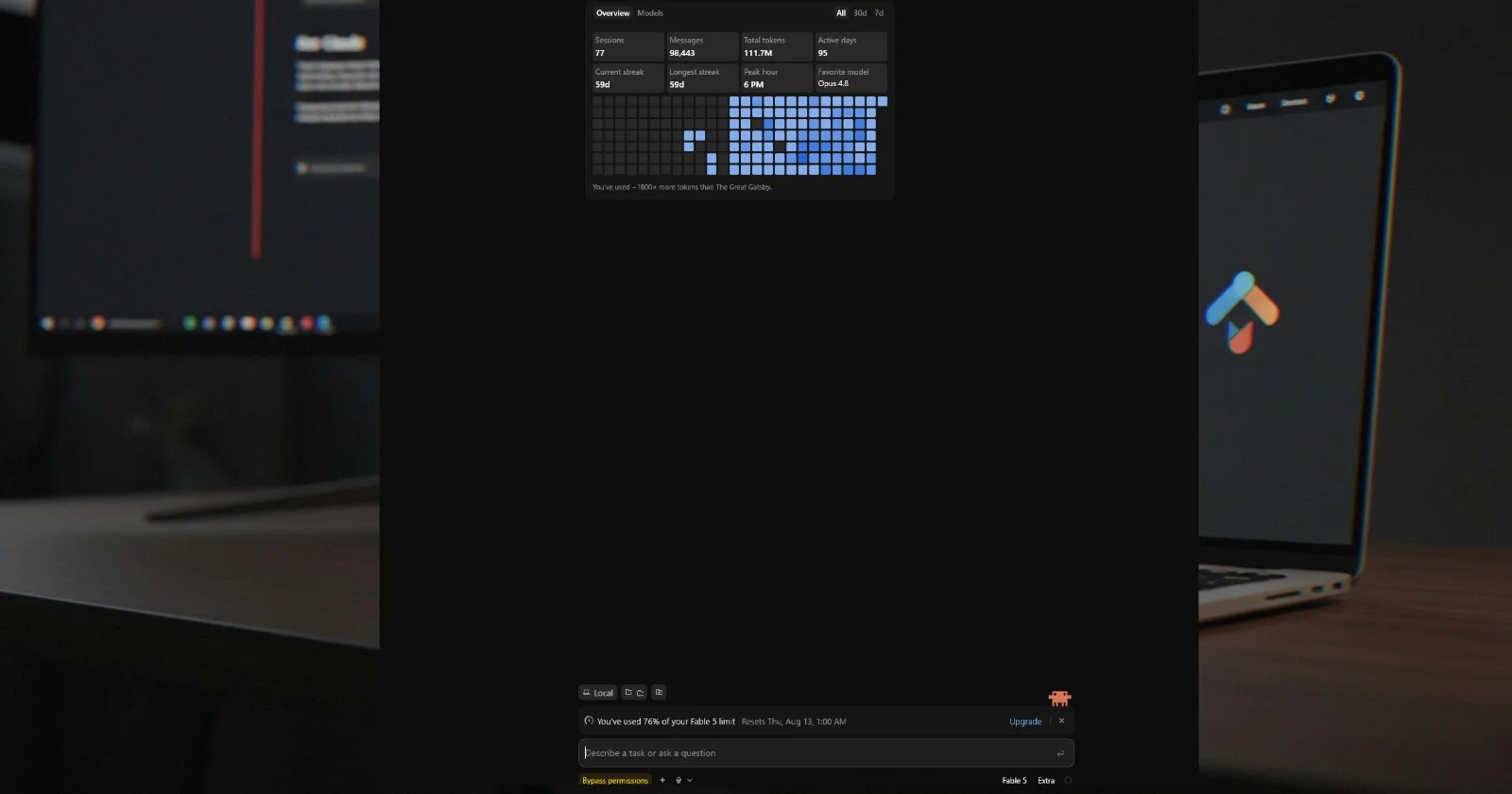

There's a claim that gets repeated in numerous discussions about Claude Max plans, and I watched a Reddit argument about it recently that was better than most published takes on the subject. The claim goes: a $200 Max 20x subscription gets you $10,000 or more worth of equivalent API usage a month, therefore Anthropic is basically giving you money, therefore enjoy it before the adults notice. And then someone in the thread fired back with a great one-line rebuttal: that's like saying the clothing shop with the giant 70 percent off sale is giving you money. Hint: they're not.
Both sides of that argument are holding a real piece of the truth, and both are missing one. So let's actually take the question apart, because "is Anthropic losing money on my plan" is really three different questions.
The math everyone quotes
The viral version works like this. Take how many tokens a heavy Claude Code user burns in a month, multiply by the API sticker price for those same tokens, and compare to $200. The gap is enormous. We've run that exercise ourselves, a truly maxed plan pencils out to thousands of dollars a month at API rates, and one analysis making the rounds suggests even someone using a small slice of their Max 20x allowance comes out ahead of what the same tokens would cost through the API. On that arithmetic, the subscription looks like a money bonfire with your name on it.
The arithmetic is fine. The conclusion doesn't follow. Because the API price is not what those tokens cost Anthropic to actually produce. It's a price tag Anthropic wrote on its own product. Comparing one Anthropic price to another Anthropic price tells you about Anthropic's pricing strategy, not about whether anyone is losing money. When the dress is marked down from $300 to $90, you did not earn $210. You just found out the $300 was always a number on a sticker and the dress maker earned huge margins.

The number that would settle it is the one nobody has
To actually know whether your plan loses Anthropic money, you'd need to know their inference cost: what it costs in GPUs, electricity, datacenter space, and engineering to serve you a million tokens. That number is a secret, and everyone confidently asserting "they lose money on every Max user" or "the margins are fat, relax" is guessing at it.
Here's what you can reason about without the secret number, though. API pricing at every major lab is widely believed to carry a healthy markup over raw serving cost, because the API is the profit lever that helps pay for everything else. If that's true, the real gap between your $200 and Anthropic's cost is much smaller than the sticker math suggests. A heavy user who'd rack up $8,000 at API rates might cost the company a fraction of that to actually serve. Still, there's the possibility that it's more than $200, sure. But "somewhat underwater on the heaviest users" is a very different story than "lighting five figures on fire per subscriber," and the difference matters for how long the deal survives.
The eye-watering numbers, like the ones we covered on the industry's burn rates, are dominated by training runs, research, salaries, and datacenter buildout. A company can be hemorrhaging billions overall while the marginal cost of serving your subscription is fine. Those are two different ledgers, and the viral math smashes them together.
Subscriptions are gyms, not buffets
The other thing the sticker math ignores is that nobody sells subscriptions expecting every user to max them. Subscriptions are priced on averages. The gym doesn't lose money because you theoretically could live there; it prices for the fact that most members show up once or twice a week, and the January crowd subsidizes the powerlifters. Max plans work the same way. For every developer running agents around the clock and maxing out usage, there are others paying $100 or $200 and using a fraction of it.
This is also why the 5 hour and weekly caps exist and keep getting tuned. The limits aren't arbitrary meanness, they're the fence that bounds the whales so the average stays survivable. If the blended math were truly catastrophic, you wouldn't get a discount, you'd get what heavy users have already started seeing across the industry: tighter weekly limits, metered tiers, and plan structures that quietly steer the heaviest usage toward paying its own way.
And your "$10,000 of value" isn't really $10,000 either
Now the part of the Reddit thread that deserves a trophy. Someone pointed out that the value side of the equation is just as inflated as the cost side. You are not getting $10,000 of value unless you actually pay $10,000 for those tokens, and the truth is that almost nobody would. Run the test honestly: if all subscriptions vanished tomorrow and API pricing was the only door, would you pay it? Most people wouldn't. They'd downgrade their usage, switch to a cheaper model, run an LLM locally, or route the easy work to an open-weight alternative and save the frontier stuff for special occasions.
You can't resell the tokens. There's no arbitrage. The $10,000 figure is what economists would call a price nobody pays, and what the rest of us would call girl math. What you're actually getting is tokens at a price you were willing to pay, which is the same thing every functioning market gives you. That's a good deal.
So what's the honest answer?
Three questions, three answers. Is Anthropic losing money on you specifically, if you're a whale who pins the 20x plan to its limits? At the margin, possibly yes, and you should send them a holiday card. Is it losing money on the average Max subscriber's inference? Unknown from the outside, and less likely than the sticker math implies. If you ask me, probably not. Is the company losing money overall? Obviously, like everyone at the frontier, but that's the training-and-buildout ledger, and your subscription was never going to be what balances it.
What the subscription actually is, I think, is the cheapest customer acquisition and market research money can buy. Anthropic gets developers wired into Claude Code as a daily habit, gets real-world agentic workload data you cannot buy anywhere, and gets the growth numbers that fundraising runs on. You get frontier tokens below sticker price. Everyone's happy, nothing about it is charity, and the second the strategy stops paying, the deal probably changes shape. Which is exactly why the right move is the one we keep coming back to: enjoy the subsidy, build real skills underneath it, and never architect your life around a discount surviving forever. Clothing store rules. The sale is real, the generosity isn't.