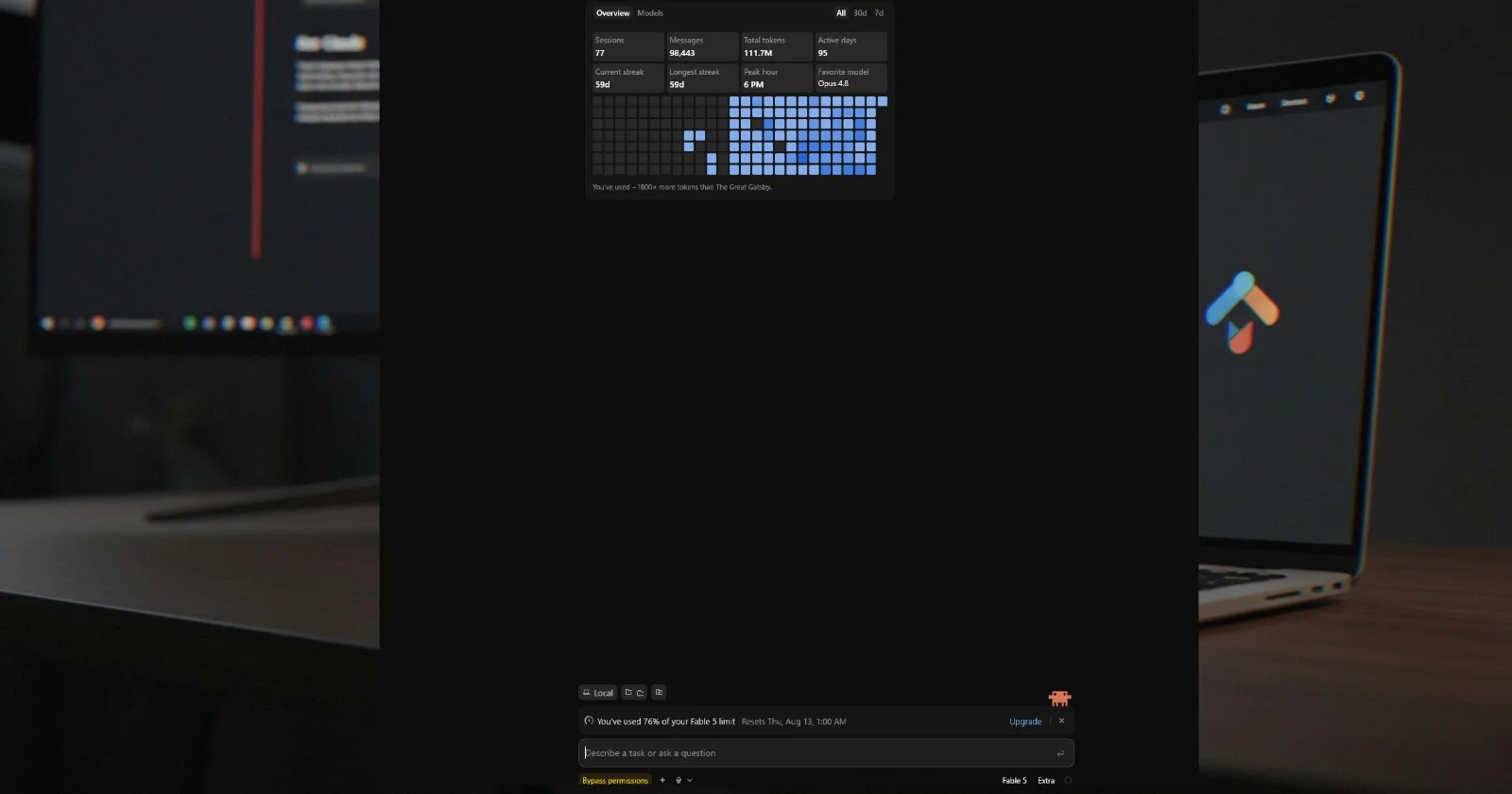

Let's name the fear out loud, because a lot of you are quietly thinking it even if you haven't said it. You've built your entire workflow around Claude Code or Codex. Your whole way of working, maybe your whole business, runs through this tool now. It's cheap, it's incredible, you're hooked. And somewhere in the back of your skull there's a voice going: this is exactly how it always starts. Get everyone dependent on the cheap magical new toy, wait until they can't function without it, then yank the deal out from under them. The crypto people have a word for it. The rug pull. So the question is real: are Claude Code and Codex setting us up for one?
It already happened. Ask Cursor users.
You want to know what an AI coding rug pull feels like? You don't have to imagine it. Cursor, one of the most popular AI coding tools on the planet, did a textbook one in 2025, and the wreckage is well documented.
Here's what went down. In June 2025 Cursor quietly switched from a fixed 500-request plan to a credit-based system, and the practical effect was that the same $20 plan went from about 500 requests to roughly 225, without giving existing subscribers any migration period. People woke up one day and their plan had been cut in half. Users logged in to find their plan had effectively changed with no clear notice, workflows that used to fit comfortably suddenly triggered overage charges, and high-profile users started posting receipts showing surprise daily charges of $10 to $20 they hadn't expected. One top comment on the Cursor subreddit nailed the betrayal: you woke up one day and your 500 requests became 225, that's how you burn goodwill with developers. Three thousand people upvoted it.
Many online users said that was a rug pull. Not "we sunset the product," but the quieter version, the deal you signed up for silently getting worse once you were already dependent and building habits around it. The CEO had to publicly apologize, the company offered refunds for the surprise charges, and a real chunk of the community packed up and left. So this isn't a hypothetical I'm scaring you with. It already happened to the tool right next door, and it's the template for what we're worried about.

And it wasn't a one-off, the whole category is doing it
If it were just Cursor you could call it a fluke. It's not. In March 2026 Windsurf switched from a credit system to quota-based billing, triggering its own user backlash from developers who liked sprinting through big tasks and suddenly found themselves rate-limited, and new subscribers got bumped from $15 to $20 a month under the new system. GitHub Copilot moved to usage-based billing starting June 1, 2026, so the flat plan price is now just the entry point rather than the whole budget. The entire category is quietly migrating from "flat predictable price" to "usage-based, and by the way the meter's running."
That's the actual shape of the rug pull in this market. It's not a single dramatic yank. It's the slow conversion of "unlimited for twenty bucks" into "here's your credit pool, and here's the overage rate when you blow through it." And it makes sense why, which we'll get to, but the pattern across Cursor, Windsurf, and Copilot is impossible to miss once you've seen it three times. The flat-rate buffet era is ending across the whole space, not just at one company.
Why the pressure to pull is real
The truth is that these AI companies are losing money on your subscription. The cheap plans are subsidized by investor cash, priced to grab market share, not to make a profit. The whole playbook is straight out of the Uber and DoorDash era: get everyone hooked on artificially cheap service, achieve dependence and market dominance, then slowly crank the price toward what it actually costs once people can't easily leave.
And agentic coding is the worst possible product to subsidize, because we are the heaviest users imaginable. Every Claude Code task burns a mountain of tokens, looping and reading and fixing, so the people who love these tools the most are exactly the people costing the companies the most money. That's an unstable arrangement. You cannot indefinitely lose money on your most engaged users. Something has to give, and "raise the effective price on the heavy users" is the obvious lever, which is exactly what Cursor and Windsurf and Copilot all just pulled. The dependence is the whole point of the strategy. They want you hooked precisely so they have pricing power later.
But here's why a full rug pull is hard, and this is the good news
Okay, deep breath, it's not all gloomy. Watch what happened after Cursor pulled its move. A critical mass of prominent developers publicly announced they were leaving, search interest in "cursor alternatives" went from basically zero to climbing fast, and a bunch of them migrated straight to Claude Code precisely because it offered pay-as-you-go with no surprise plan-tier games. Cursor nearly torched the community that built it, and it spent the next year doing damage control and walking things back.
That's your protection right there. The switching cost in this market is low and the competition is vicious. The moment any one tool pulls the rug too hard, the users bolt to a competitor who's still offering a good deal, because there are five other tools one install away. Cursor pulled the rug and a chunk of its own users landed in Claude Code. If Claude Code pulls the rug, those same people bolt to Codex, or Windsurf, or Copilot, or the open-source stuff. Nobody has enough lock-in to fully pull the rug without bleeding users to the competitor who didn't. That standoff, all of them too scared to be the first to gouge, is what keeps you protected.
And the deeper escape hatch I keep coming back to: the open models are getting good enough to run yourself. The day cloud pricing gets genuinely abusive is the day a local Qwen on your own machine starts looking real attractive, and that's a ceiling the cloud companies can't price above. They know it. It's part of why nobody's done the truly dramatic rug pull yet. The exit door is too easy to find.
So how worried should you actually be?
The dramatic rug pull, where Claude Code or Codex suddenly becomes unusable or unaffordable overnight, is unlikely, because the competition and the open-source escape hatch make it too risky for anyone to try. Nobody wants to be the company that pulled a Cursor and watched everyone leave. So you can probably relax about the doomsday scenario at the moment.
But the slow squeeze? That's not a maybe, that's already in motion, and it's coming for Claude Code and Codex the same way it already hit Cursor, Windsurf, and Copilot. Expect the 5x and 20x tiers to quietly get capped, the heavy agentic usage to get nudged onto metered billing, the effective price per real task to creep up over the next year or two. Not a yank, a tightening. You won't wake up to a dead tool. You'll wake up, eventually, to a usage meter where there used to be a flat rate, and a bill that's bigger than you remember signing up for.
So what do you do? Don't build your whole operation on the assumption the current price lasts forever, because it most likely won't. Stay loose, stay portable, don't get so locked into one tool's specific way of doing things that switching is painful, because your ability to walk is the only real leverage you have. Keep an eye on the open models so you've got a ripcord. And honestly, enjoy the subsidized buffet while the investors are still paying for it, just don't fall so in love that you can't leave when the check comes. Because the check is coming. It always does. The trick isn't avoiding it, it's making sure you're never so dependent that you can't get up and walk over to the table that's still affordable.
Sources
AI Tool Discovery: Cursor AI Pricing 2026 - The June 2025 shift from a fixed 500-request model to credits that effectively cut Pro from 500 to about 225 requests, the CEO's public apology, and the developer migration to Windsurf and others.
We Are Founders: Cursor's Pricing Disaster Timeline - The poorly communicated plan changes, surprise $10-$20 daily charges, the community backlash, and the wave of developers leaving for Claude Code and other alternatives.
NxCode: Windsurf vs Cursor 2026 - Windsurf's March 2026 switch to quota-based billing, the resulting backlash from rate-limited developers, and the price bump from $15 to $20 for new subscribers.
Developers Digest: AI Coding Tools Pricing 2026 - GitHub Copilot's move to usage-based billing on June 1, 2026, and the broader shift across tools toward treating the plan price as an entry point rather than the full budget.